


Free Palestine


The “Free Palestine” movement has grown beyond political demonstrations and calls for human rights. It has also become connected with fashion, social media campaigns, fundraising and the commercialisation of activism. At the same time, Gaza’s humanitarian crisis, Hamas’s October 7, 2023, attacks, allegations concerning aid distribution and the long history of the Israel-Palestine conflict continue to shape the debate.

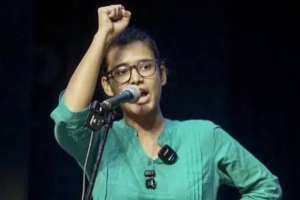
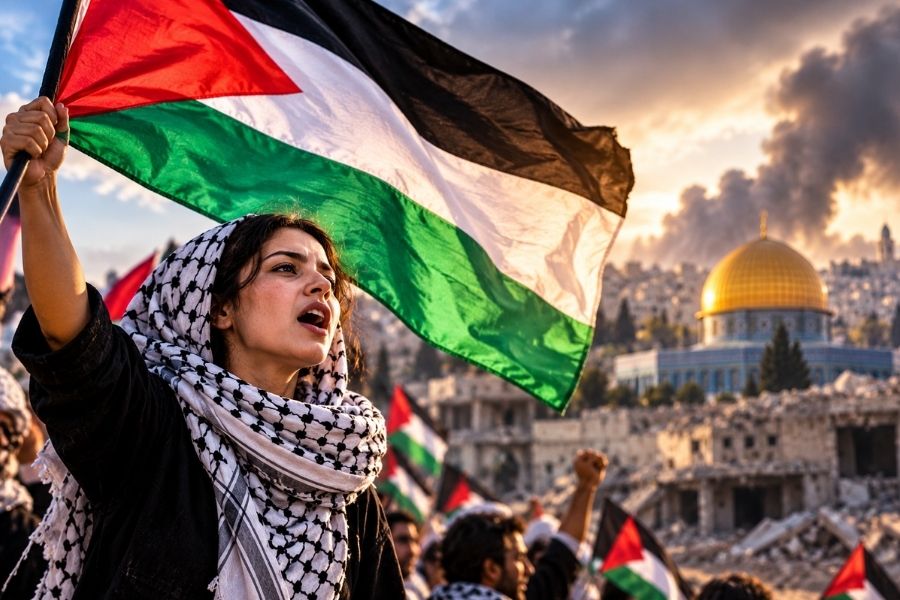
Pro-Palestinian demonstrations have taken place in cities around the world. Young people have participated in protests, while social media creators have used online platforms to discuss Palestine and raise awareness about the conflict.
The keffiyeh, a traditional Palestinian headscarf and a symbol of Palestinian identity and solidarity, has also become a prominent fashion item. Palestinian-themed designs now appear on a wide range of products, including dog bandanas, crop tops, evening bags, stickers, badges, tote bags, football jerseys, bracelets and sweatshirts.
This trend raises an important question: what happens when a symbol of political solidarity and human rights becomes a commercial product? Supporters argue that such merchandise can spread awareness and help people express their solidarity. Critics, however, question whether commercial branding can dilute the movement’s message or turn a humanitarian cause into a marketing opportunity.
The distinction between genuine advocacy and commercial exploitation has consequently become an important part of the wider debate.
Pro-Palestinian activism has also gained visibility on university campuses in the United States. Reports cited in discussions of the protests have referred to more than 1,360 demonstrations, over 170 encampments and more than 3,100 arrests. Demonstrations have also taken place in London, France, Milan and Madrid, with some incidents reportedly involving disorder or clashes.
These developments demonstrate the international reach of the movement, while also highlighting disagreements over protest tactics, public order and the boundaries of political expression.
Fundraising has become another significant aspect of pro-Palestinian activism. Claims cited in the debate suggest that around 20 pro-Palestinian organisations in the United States raised more than $250 million over five years. UNRWA USA reportedly raised more than $51 million in 2024.
However, the amount of money raised is only one part of the issue. Transparency, accountability and the effective delivery of humanitarian assistance are equally important, particularly in a conflict zone where civilians face severe shortages of food, medicine and other essential supplies.
Questions have also been raised about the distribution of aid entering Gaza. One claim, attributed to documents associated with Hamas, suggested that between 15 and 25 per cent of incoming aid was systematically diverted. Allegations have also emerged concerning the involvement of some UNRWA employees in the October 7 attacks.
Such allegations require careful examination. Their credibility must be assessed through reliable evidence, independent investigations and responses from the organisations concerned. Allegations should not automatically be treated as established facts, and claims about individual employees should not be generalised to an entire humanitarian organisation.
The issue is particularly sensitive because humanitarian assistance is essential to the survival of Gaza’s civilian population. Ensuring that food, medical supplies and other relief reach those who need them remains a critical challenge.
Gaza’s humanitarian situation remains central to the international debate. Figures attributed to the Palestinian Central Bureau of Statistics and the United Nations Conference on Trade and Development (UNCTAD) have described a dramatic deterioration in living conditions and economic activity.
The figures cited include a claimed 10.6 per cent decline in Gaza’s population, bringing it to approximately 2.13 million; an 83 per cent contraction in GDP during 2024; and an unemployment rate reaching 78 per cent. These figures should be read in the context of the reporting period and the methodology used by the respective institutions.
The war has caused extensive damage to homes, hospitals, schools and essential infrastructure. Large numbers of people have been displaced, while access to food, clean water, healthcare and safe shelter has become increasingly difficult.
Reconstruction estimates have placed Gaza’s recovery needs at approximately $70 billion to $71.5 billion. The challenge extends far beyond rebuilding damaged structures. It includes restoring healthcare and education, rebuilding essential infrastructure, creating employment and helping displaced families return to stable lives.
Supporters of the Free Palestine movement argue that international advocacy is necessary to maintain attention on the suffering of civilians and to encourage humanitarian assistance. Critics, meanwhile, question whether funds raised in the name of the cause are managed transparently and whether assistance reaches the intended beneficiaries.
These concerns underline the importance of independent oversight, reliable reporting and clear accountability mechanisms.
The present conflict has roots in decades of political disputes, competing territorial claims, security concerns and unsuccessful peace initiatives. Although a two-state solution has repeatedly been proposed as a framework for resolving the conflict, a lasting agreement has yet to be achieved.
The 2000 Camp David summit, the Clinton Parameters proposed later that year, and the peace proposal presented by Israeli Prime Minister Ehud Olmert in 2008 remain important episodes in the diplomatic history of the conflict.
Different parties disagree over why these initiatives failed and how much progress they could realistically have achieved. These differences continue to influence contemporary discussions about peace, security and Palestinian statehood.
From an Israeli perspective, the rejection of certain proposed agreements by Palestinian leaders and the activities of armed groups such as Hamas have been major obstacles to peace. Palestinian perspectives, meanwhile, frequently emphasise Israeli occupation, settlement expansion, restrictions on movement and the longstanding demand for an independent state.
The history cannot be reduced to a single explanation. The conflict involves competing national aspirations, security concerns, historical grievances and deep political divisions.
Despite these disagreements, several issues remain central to any credible effort towards peace: protecting civilians, securing the release of hostages, ensuring humanitarian access and creating conditions for meaningful political negotiations.
The debate surrounding the Free Palestine movement is about more than protests or fashion. It raises broader questions about political advocacy, fundraising transparency, humanitarian responsibility and the prospects for a lasting resolution to the conflict.
Commercial products featuring Palestinian symbols can help spread awareness and provide people with a visible way to express solidarity. However, there is also a risk that a serious humanitarian cause may be reduced to a marketing trend or used primarily for commercial gain.
Similarly, fundraising can provide essential support to people affected by war, but it must be accompanied by transparency, accountability and evidence that resources are being used for their intended purposes.
Ultimately, the most important questions concern the rights and security of Palestinians, the safety of Israeli civilians, the humanitarian emergency in Gaza and the possibility of a sustainable political settlement.
The challenge is to ensure that political advocacy, commercial interests and fundraising efforts do not overshadow the human consequences of the conflict—or the urgent need for a credible path towards peace.








© Copyright 2026, cloudTV. All Rights Reserved