


Punjabistan Debate


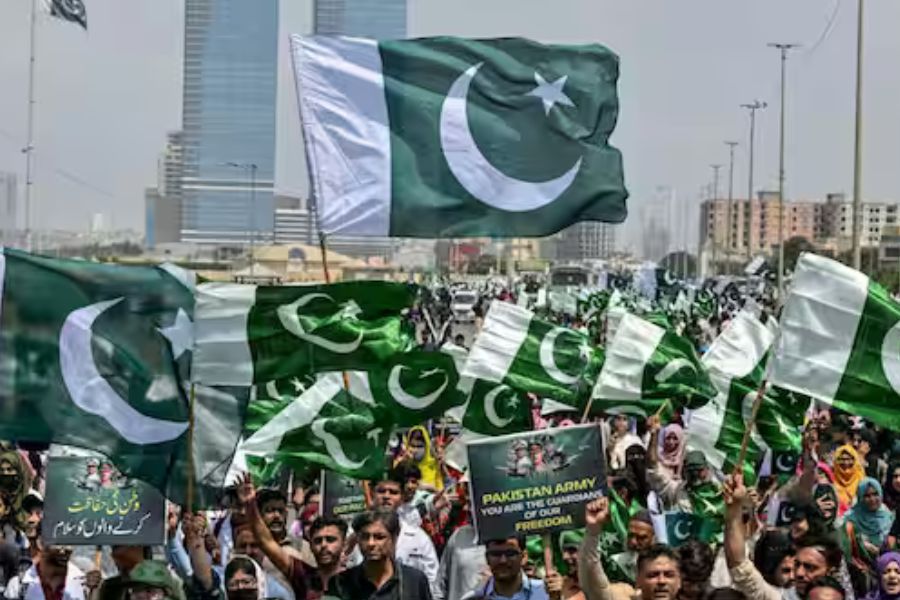
A recent opinion article published by a media house has generated discussion by arguing that Pakistan is increasingly becoming centred around Punjab due to political, economic and security challenges in other parts of the country. The article uses the term “Punjabistan” to describe what the author sees as a growing concentration of power in Punjab.

It is important to note that this is an opinion article. The arguments presented reflect the author’s interpretation and are not official findings or independently established facts.
According to the opinion piece, prolonged unrest in Balochistan, militant violence in Khyber Pakhtunkhwa, political developments in Pakistan-administered Kashmir (PoK), and governance challenges in Sindh have weakened the influence of Pakistan’s peripheral regions.
The author argues that Punjab increasingly dominates Pakistan’s political leadership, military establishment and economic decision-making. Based on this assessment, the article suggests that the country’s institutional balance has shifted significantly toward Punjab.
These claims represent the author’s analysis and have not been officially endorsed by Pakistan or international institutions.
Pakistan has experienced political instability, economic challenges and security concerns over the past several years. However, analysts differ in their assessment of the country’s future.
Some observers argue that regional unrest has created structural challenges for the federal government. Others contend that Pakistan’s national institutions remain functional and caution against drawing conclusions that suggest an imminent breakdown of the state.
As a result, the “Punjabistan” concept remains a debated political interpretation rather than an accepted geopolitical description.
The opinion article has contributed to wider discussions about South Asian geopolitics and Pakistan’s internal political dynamics. Questions surrounding federal governance, provincial representation and security remain important topics for policymakers and researchers.
Whether Pakistan experiences deeper regional fragmentation or maintains stronger federal cohesion will depend on multiple factors, including economic reforms, political stability, security conditions and relations among its provinces.
Because the article is explicitly presented as opinion, readers should distinguish between analytical arguments and verified factual reporting. Broader assessments of Pakistan’s political future continue to vary across experts, research institutions and international observers.






© Copyright 2026, cloudTV. All Rights Reserved