


Ceuta Migrant Crisis


Spain’s North African enclave of Ceuta has once again become the focus of international attention after an unprecedented surge of migrants crossed the border from Morocco. The sudden influx overwhelmed local authorities, prompted Spain to deploy military reinforcements, and reignited political debates across Europe over migration, border security and humanitarian responsibility. The incident is one of the largest migrant movements recorded at the Spain-Morocco border in recent years.

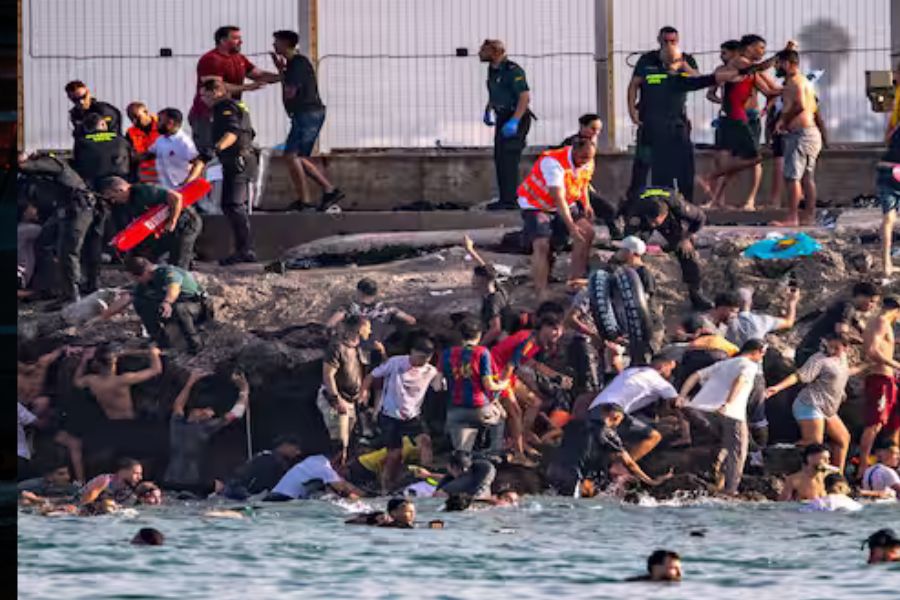
Thousands of migrants attempted to enter Ceuta by land and sea within a short period. Many climbed border fences, while others swam around breakwaters separating Morocco from the Spanish territory. The massive influx placed enormous pressure on reception centres, emergency services and security personnel.
Spanish authorities confirmed multiple deaths and injuries during the crossings, with many migrants suffering from exhaustion, drowning or crowd crush incidents. Emergency workers and security forces carried out rescue operations throughout the day while hospitals treated the injured.
To restore order, Spain deployed military units alongside police and the Civil Guard. Officials also worked closely with Moroccan authorities to prevent further crossings and facilitate the return of many migrants.
Ceuta is an autonomous Spanish city located on the northern coast of Africa. Although geographically surrounded by Morocco, it is part of Spain and therefore represents one of the European Union’s only land borders with Africa.
Because entering Ceuta means reaching Spanish territory, many migrants see it as a gateway to Europe. The enclave has witnessed repeated migration crises over the past two decades, making it a sensitive point in Spain-Morocco relations.
Morocco continues to claim sovereignty over Ceuta, while Spain insists it is an integral part of the country. This long-running territorial dispute adds a diplomatic dimension whenever migration pressures rise.
The latest migrant surge has intensified political debate across Europe. Several European governments have called for stronger protection of the EU’s external borders, while humanitarian organisations have urged authorities to prioritise the safety and rights of migrants.
Spanish Prime Minister Pedro Sánchez described the incident as a challenge to Spain’s sovereignty and pledged stronger border management while cooperating with Morocco on migrant returns. European leaders are also expected to discuss the incident as part of broader efforts to reform migration policy across the bloc.
Analysts believe the crisis highlights deeper issues, including economic hardship, human trafficking networks and instability that continue to push people toward dangerous migration routes. Unless those root causes are addressed, similar crises are likely to recur despite tighter border controls.








© Copyright 2026, cloudTV. All Rights Reserved