



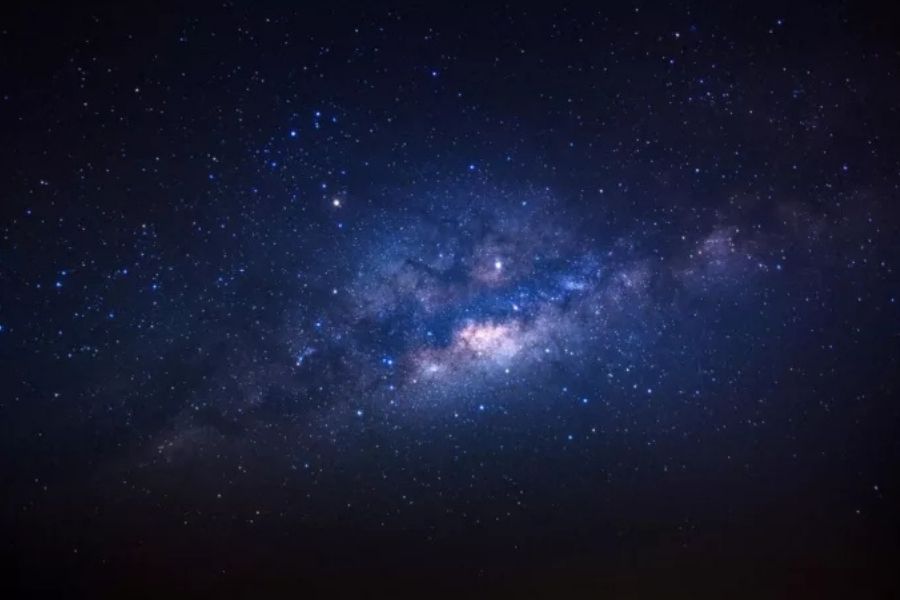
Massive Gas Reservoir in Early Galaxy


Cloud TV Desk: Astronomers have discovered a massive reservoir of hydrogen gas in one of the earliest known galaxies in the universe, offering new insights into how galaxies formed and evolved shortly after the Big Bang.

The discovery was made in the galaxy JADES-GS-z14-0, which is observed as it existed approximately 300 million years after the birth of the universe. Using observations from the James Webb Space Telescope (JWST) and the Atacama Large Millimeter/submillimeter Array (ALMA), researchers identified an enormous amount of neutral hydrogen gas surrounding the galaxy.
According to the study, the galaxy contains an estimated 6 to 10 billion solar masses of hydrogen gas. Scientists believe that more than 90 percent of its visible matter remains in gaseous form rather than being converted into stars.
Hydrogen gas serves as the primary fuel for star formation. The presence of such a vast gas reservoir suggests that JADES-GS-z14-0 still has the potential to create large numbers of new stars despite already appearing unusually bright and developed for its age.
The finding has surprised astronomers because many existing models predicted that galaxies this early in cosmic history would either be relatively small or would have already transformed much of their gas into stars. Instead, JADES-GS-z14-0 appears both chemically evolved and gas-rich.
Previous observations of the galaxy had already revealed the presence of oxygen, indicating that multiple generations of stars had formed and died within a remarkably short period after the Big Bang. The newly discovered gas reservoir adds another layer of complexity to scientists’ understanding of early galaxy growth.
Researchers detected the gas through a strong damped Lyman-alpha absorption signature in the galaxy’s spectrum. This feature is considered one of the most reliable indicators of large quantities of neutral hydrogen in distant galaxies.
Scientists emphasize that the discovery does not challenge the Big Bang theory itself. Rather, it suggests that current models of galaxy formation and evolution may need revision to account for the rapid growth and development of some of the universe’s earliest galaxies.
The study highlights the transformative capabilities of the James Webb Space Telescope, which continues to uncover unexpected features of the early universe and reshape our understanding of cosmic history.
As astronomers gather more data from distant galaxies, discoveries like this could help reveal how the first generations of stars and galaxies emerged from the primordial universe.







© Copyright 2026, cloudTV. All Rights Reserved