



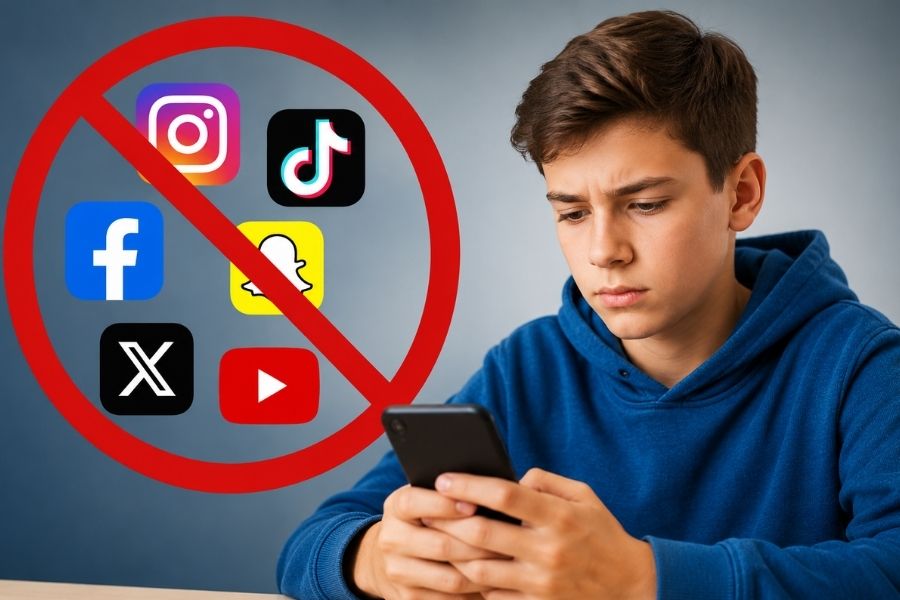
UK Social Media Ban


Cloud TV Desk: The United Kingdom is preparing to introduce strict new regulations that could prevent children under the age of 16 from accessing social media platforms, following a similar move by Australia aimed at improving online safety for young users.

The proposed legislation is part of a broader effort by the British government to address growing concerns about the impact of social media on children’s mental health, online privacy, and exposure to harmful content. If implemented, the UK would become one of the first major countries in Europe to impose such sweeping restrictions on underage social media use.
According to reports, the government is exploring an “Australia Plus” model that would require social media companies to verify users’ ages more effectively and block access for those under 16. Platforms potentially affected include Instagram, TikTok, Facebook, Snapchat, X, and YouTube.
Officials argue that children are increasingly exposed to cyberbullying, addictive algorithms, inappropriate content, and online predators through social networking platforms. The proposed restrictions are designed to create a safer digital environment and encourage healthier online habits among teenagers.
Technology companies would likely be required to implement advanced age-verification systems, including digital identity checks and facial age-estimation tools. Firms that fail to comply with the regulations could face substantial financial penalties.
Supporters of the plan say stronger protections are urgently needed as screen time among young people continues to rise. However, critics argue that enforcing such a ban could be challenging and may raise privacy concerns regarding age-verification technology.
The proposal comes amid a global trend toward tighter regulation of social media. Australia recently passed landmark legislation restricting access to social networking platforms for users under 16, while several other countries are considering similar measures.
As lawmakers debate the details, the UK’s proposed ban is expected to spark further discussions about balancing child safety, digital freedom, and privacy rights in the modern internet era.








© Copyright 2026, cloudTV. All Rights Reserved