



Taslima Nasrin Kolkata


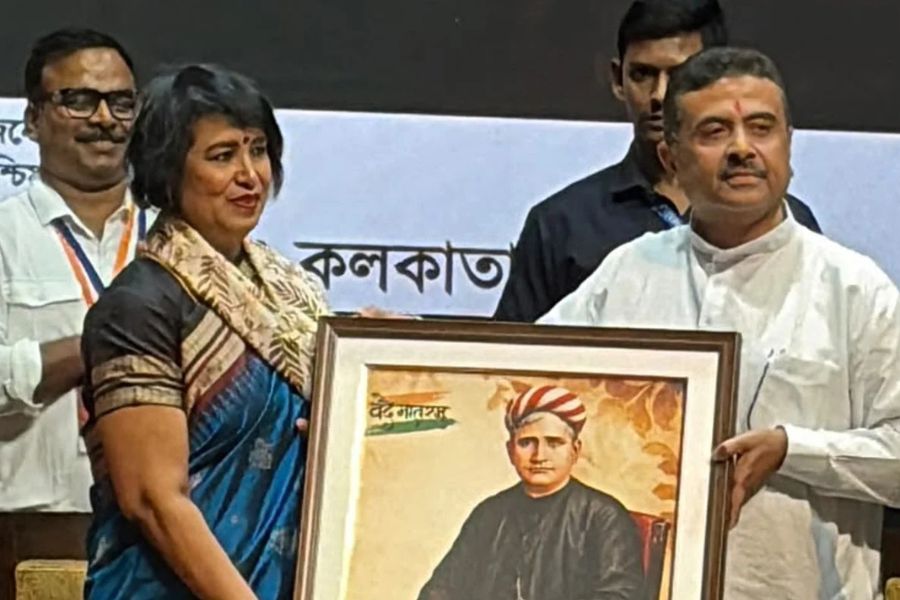
Exiled Bangladeshi author and human rights activist Taslima Nasrin was felicitated by West Bengal Chief Minister Suvendu Adhikari at a literary event in Kolkata on Saturday, marking her first public appearance in the city in nearly 19 years. The event at Rabindra Sadan was widely viewed as both a literary celebration and a symbolic political moment.

Nasrin returned to Kolkata on July 31 after spending almost two decades away from the city she once called home. She was forced to leave Kolkata in November 2007 following violent protests and security concerns triggered by her writings, particularly on women’s rights, secularism and religious extremism.
The literary programme was organised by several cultural organisations to honour Nasrin’s contributions to literature and freedom of expression. Chief Minister Suvendu Adhikari presented her with a ceremonial felicitation in the presence of prominent writers, artists and intellectuals. The event was attended by noted Bengali author Shirshendu Mukhopadhyay and other distinguished guests.
Speaking after arriving in Kolkata, an emotional Nasrin said she was delighted to return to the city that had once become her refuge. She described the visit as an “emotional homecoming” and expressed hope that she could stay in Kolkata permanently if adequate security was ensured. (The Times of India)
At the airport, Nasrin received a warm traditional welcome from admirers, who greeted her with flowers, shawls and conch shell sounds despite tight security arrangements. She thanked supporters for the overwhelming reception and said Kolkata continued to hold a special place in her heart.
The event also highlighted the changing political landscape in West Bengal. Observers noted that a state-sponsored felicitation for Nasrin would have been difficult to imagine after her departure in 2007. Her return and public honour are being seen as a significant shift in the state’s approach towards the controversial yet internationally recognised author.
Nasrin, who fled Bangladesh in 1994 after receiving death threats over her novel Lajja, has spent much of her life in exile. She remains an outspoken advocate for women’s rights, secular values and freedom of expression, while continuing to face opposition from religious fundamentalist groups.
Her Kolkata homecoming has generated widespread discussion across literary and political circles in both India and Bangladesh, with many describing the occasion as a landmark moment in her long journey through exile and resilience.








© Copyright 2026, cloudTV. All Rights Reserved