


Rana Rauf ISI Spy


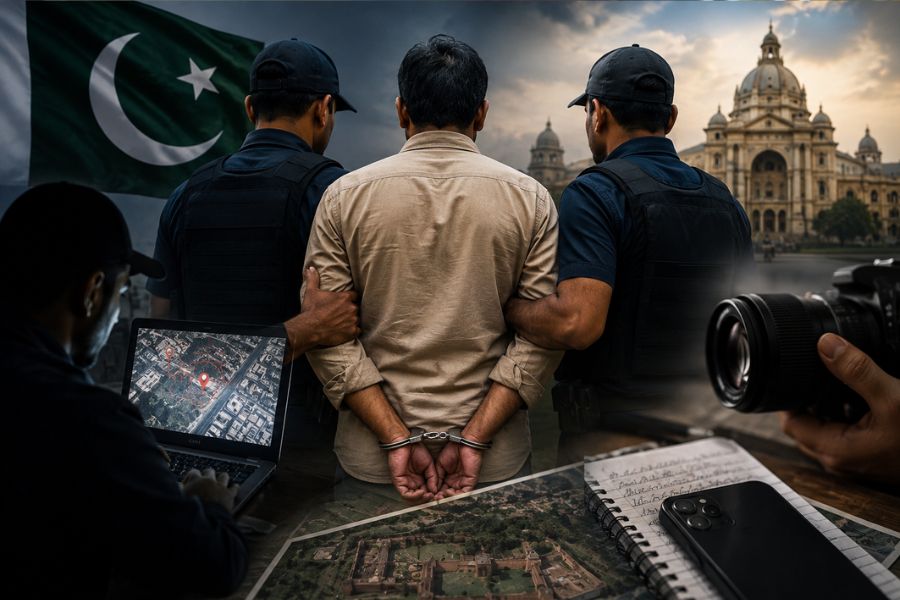
The arrest of suspected Pakistani national Rana Rauf in West Bengal has triggered a major security investigation, with the state Special Task Force examining his alleged links with Pakistan’s Inter-Services Intelligence.

Rauf, also identified as Wahab Alam, was arrested from Habra in North 24 Parganas on Wednesday. Another man, Mohammad Izaz, has also been detained in connection with the investigation.
Investigators are examining allegations that Rauf had been involved in collecting sensitive information relating to military and security infrastructure.
The case has assumed added significance because photographs and maps of Fort William, the headquarters of the Indian Army’s Eastern Command in Kolkata, were reportedly recovered during the investigation.
However, the allegations are still under investigation and have not been established by a court.
According to investigators, Rauf told the STF during questioning that he had wanted to join the Pakistan Army from a young age.
Police sources claim that he could not join the military because of a physical problem.
Investigators allege that Rauf subsequently sought another way to work for his country and eventually became connected with Pakistan’s intelligence network.
This account is based on what investigators say they learned during interrogation. It has not independently been established in court. Rauf is reportedly from Faisalabad in Pakistan. Investigators claim that he travelled to Nepal in 2012 and lived there while presenting himself as a businessman.
He allegedly later came into contact with Mohammad Izaz and subsequently travelled to Kolkata. The STF is also investigating allegations that Rauf used forged documents and an assumed identity to establish himself in India.
Authorities are now reconstructing his movements over the years, including his stay in Nepal and subsequent activities in West Bengal. Investigators are also examining his communications and digital devices to determine whether he maintained contact with people outside India.
The case has expanded beyond Rauf himself, with authorities looking into a wider network of contacts in Nepal and Bangladesh.
One of the most significant elements of the investigation is the reported recovery of photographs and maps related to Fort William.
The military complex houses the headquarters of the Indian Army’s Eastern Command, making any unexplained collection or transmission of detailed information about the facility a matter of national security concern. Investigators are now trying to establish why the material was collected and whether it was transmitted to any foreign contact.
Reports also say the STF is examining allegations that Rauf collected information related to Army facilities, BSF establishments and railway infrastructure. The investigators are reportedly analysing photographs, videos, maps and other digital material recovered from devices linked to the case.
However, possessing photographs or publicly accessible information about a military location does not automatically establish espionage.
Investigators would need to establish the source of the information, the circumstances in which it was collected, whether it contained sensitive or restricted material and whether it was transmitted to a foreign intelligence organisation.
According to a report by The Indian Express, investigators are examining phone numbers and social-media links connected with Pakistan, Nepal and Sri Lanka. Some deleted information is also reportedly being recovered. Military intelligence agencies are assisting the investigation.
The authorities are therefore focusing heavily on digital evidence.
Rauf reportedly destroyed a mobile phone in an attempt to conceal information about his associates, according to the allegations cited in the investigation.
Investigators, however, claim they recovered additional leads from his notebook.
The alleged network includes several individuals based in Nepal and Bangladesh. Their identities and exact roles remain subject to investigation.
Another important aspect of the case is an alleged plan to travel to Bangladesh. According to the information provided by investigators, Rauf was allegedly planning to leave India through the Bengal-Bangladesh border.
Authorities are examining whether the proposed journey was connected to his alleged intelligence activities and whether he was expected to meet other contacts after crossing the border. The investigation is also looking into the role of Mohammad Izaz, who is suspected of assisting Rauf.
Investigators claim that the two men had been in contact and that Izaz helped Rauf establish connections in Kolkata. Authorities are now examining the duration and nature of their relationship.
The wider investigation is focused on determining whether Rauf was actually operating as an agent of a foreign intelligence organisation or whether the allegations can be supported by independent evidence.
The distinction is important because interrogation statements and police allegations alone do not establish guilt.
The evidence will have to be tested through forensic examination, digital analysis, witness statements and judicial proceedings. The reported recovery of Fort William photographs and maps has nevertheless increased the seriousness of the investigation.
The authorities are now attempting to determine whether any sensitive information was collected, copied or transmitted outside India. They are also examining whether Rauf had contacts with other individuals who may have been involved in intelligence gathering. The arrest comes shortly before India’s Independence Day, adding to the security concerns surrounding sensitive military installations.
Investigators are expected to continue analysing the accused’s digital records, communications, travel history and financial links. The case could potentially reveal whether the alleged activity was limited to information gathering or formed part of a larger intelligence network. For now, the investigation remains ongoing.
The central questions are whether Rana Rauf had a genuine connection with Pakistan’s ISI, what information he allegedly collected, whether that information was transmitted to foreign contacts and whether anyone else in India assisted him. Until those questions are answered through evidence and due legal process, the allegations against Rauf remain allegations.
The investigation, however, has already raised significant national-security concerns because of the reported Fort William material and the alleged links extending across Nepal, Bangladesh and West Bengal.





© Copyright 2026, cloudTV. All Rights Reserved