


Pakistan Crisis


Pakistan is facing a convergence of internal security, political and economic pressures in 2026.

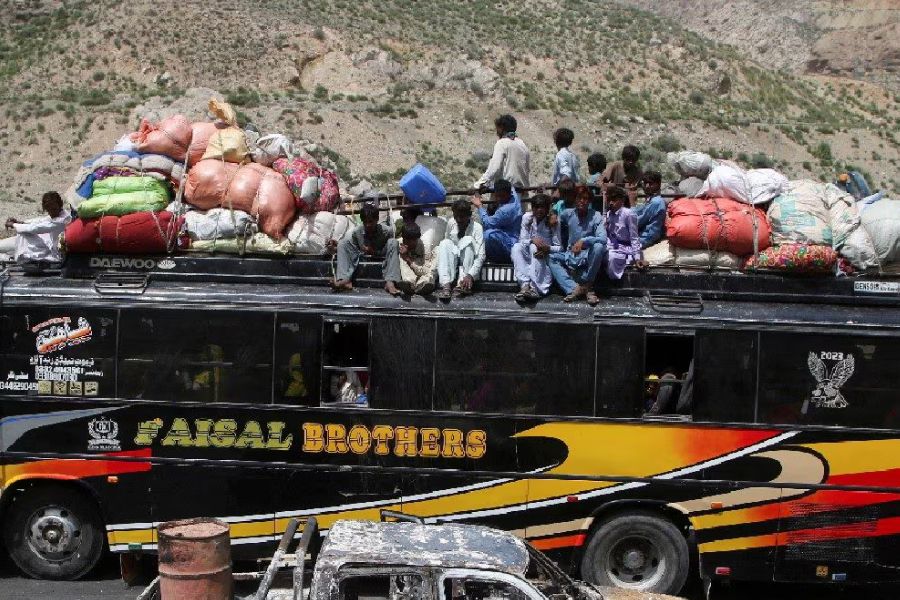
Balochistan continues to witness a serious insurgency led by groups including the Balochistan Liberation Army. Khyber Pakhtunkhwa is dealing with a renewed threat from the Tehreek-e-Taliban Pakistan. Pakistan-administered Kashmir has witnessed protests and deadly clashes around political and economic demands.
At the same time, Islamabad continues to deal with high debt, structural economic weaknesses and questions over governance.
Recent reporting suggests that the three major internal security conflicts are unfolding simultaneously, creating a serious challenge for the Pakistani state.
However, claims that insurgents currently control 85% of Balochistan or that a 500,000-strong rebel army has been established are not independently verified. Such claims should therefore not be presented as established facts.
Balochistan remains Pakistan’s largest province and has experienced decades of separatist insurgency.
The Balochistan Liberation Army has emerged as one of the most active armed groups in the region. Its attacks have targeted security forces, government facilities, transport infrastructure and other strategic locations.
The security situation deteriorated sharply in early 2026, including coordinated attacks across multiple locations in the province.
Recent figures underline the scale of the violence.
Between January and July 2026, Balochistan recorded 765 violent incidents and around 1,600 fatalities, according to recent reporting. Khyber Pakhtunkhwa recorded 574 attacks and 1,196 casualties during the same period.
The violence has also expanded geographically. Analysts have pointed to growing TTP activity in parts of Balochistan in addition to the long-running Baloch separatist insurgency.
The situation has therefore become one of the most serious internal security challenges facing Islamabad.
Yet the scale of insurgent territorial control should not be exaggerated. There is no reliable independent evidence establishing that BLA and TTP collectively control 85% of Balochistan.
Khyber Pakhtunkhwa is the second major security front.
The Tehreek-e-Taliban Pakistan has maintained an insurgency against the Pakistani state for years. The group seeks to challenge the country’s political and security order and impose its interpretation of Islamic rule.
The security situation became more complicated after the Taliban returned to power in Afghanistan in 2021.
Pakistan has repeatedly accused militant groups operating from or through Afghan territory of carrying out attacks inside Pakistan. The Afghan authorities have rejected several such allegations.
The scale of violence in KP remains significant. The province recorded 574 attacks and 1,196 casualties during the first seven months of 2026, according to recent reporting.
This has forced Islamabad to fight a two-level security battle: counter-insurgency operations at home and increasingly difficult relations with Kabul.
The result is a prolonged security challenge along Pakistan’s western border.
Pakistan-administered Kashmir has emerged as another major source of political instability.
The Joint Awami Action Committee has led protests over economic conditions, political representation and the structure of the regional political system.
One of the most contentious issues concerns 12 reserved legislative seats for refugees from Indian-administered Kashmir.
The dispute intensified during the 2026 elections. Voting in several constituencies was delayed amid violence, road blockades and communication restrictions.
Reuters reported on August 12 that Pakistan’s ruling PML-N was on course to secure a majority in the 53-seat assembly, but seven constituencies had faced delayed voting because of escalating violence.
The JAAC has claimed that more than 30 people were killed in Rawalakot during the unrest, while the government has disputed the claims and accused protesters of being backed by militants.
The Financial Times has also reported dozens of deaths during the recent unrest and described the protests as a major challenge to Pakistan’s military-backed political system.
This means Islamabad is not dealing only with armed militancy. It is also confronting political dissatisfaction in a strategically sensitive region.
The fourth front is economic.
Pakistan’s economy has shown signs of stabilization under its IMF-backed reform program. Inflation has eased and fiscal conditions have improved compared with the worst phase of the recent crisis.
However, structural problems remain.
The World Bank says Pakistan continues to face constrained fiscal space, high external financing requirements, modest reserves and policy uncertainty. It also warns that reducing poverty remains difficult because of high population growth and weak growth prospects.
Pakistan remains dependent on international financing. The IMF’s 2026 review indicates that fiscal performance has improved, but the economy remains vulnerable to external shocks.
Public debt is also extremely high. A 2026 analysis put Pakistan’s central government debt at more than 79 trillion Pakistani rupees in January.
The governance debate became even more prominent after Interior Minister Mohsin Naqvi said in late July that Pakistan’s existing governance system had “collapsed.”
Naqvi called for major administrative reforms and argued for the creation of additional provinces or administrative units.
His remarks highlighted the depth of concern within Pakistan’s own political establishment.
However, it would be inaccurate to describe the Pakistani economy as having completely collapsed. The country has made some progress under its IMF program, and S&P Global upgraded Pakistan’s sovereign rating from B- to B in July, citing improved institutional stability and reform implementation.
The real picture is therefore more complicated: Pakistan has achieved some macroeconomic stabilization while simultaneously facing severe security and political pressures.
The growing role of the military is another major factor.
Army chief Field Marshal Asim Munir has become a central figure in Pakistan’s security and foreign policy. Analysts have noted the military’s growing influence over domestic affairs.
There is speculation that the current instability could further strengthen the military’s political role. But there is no reliable evidence at present that Munir is preparing an imminent military coup.
The more immediate concern is whether Pakistan can prevent the different crises from reinforcing one another.
If violence in Balochistan and KP continues to rise, while political unrest spreads in Pakistan-administered Kashmir and economic pressures remain high, Islamabad could face an increasingly difficult governance challenge.
That does not automatically mean Pakistan’s map will change.
But the simultaneous pressure on several fronts makes 2026 one of the more challenging periods for Pakistan’s internal stability in recent years.






© Copyright 2026, cloudTV. All Rights Reserved