


Nepal Agniveer Demand


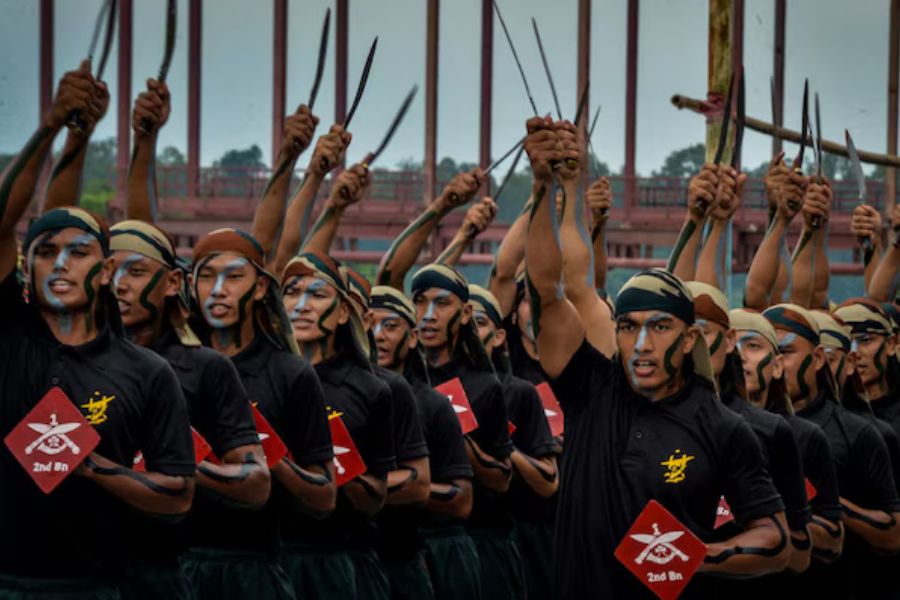
A group of Nepali youths, former Gorkha soldiers and their family members have taken to the streets in Pokhara, demanding the resumption of recruitment of Nepali citizens into the Indian Army under the Agnipath scheme.

The protesters argued that joining the Indian Army as an Agniveer is a better option than seeking employment in Gulf countries.
The demonstration was organised by the Indian Ex-Servicemen Gorkha Brigade Nepal and took place ahead of Indian Army Chief General Dhiraj Seth’s scheduled visit to Nepal. The protesters submitted a memorandum to the Chief District Officer of Kaski after marching from Pokhara Stadium to the district administration office.
The demand has brought renewed attention to the long-standing military relationship between India and Nepal and the future of Gorkha recruitment.
For generations, Nepali citizens have served in the Indian Army’s Gorkha regiments. The military connection has become one of the enduring links between India and Nepal. However, recruitment of Nepali Gorkhas has been suspended since 2019.
The recruitment process initially stopped because of the Covid-19 pandemic. It was subsequently not resumed after India introduced the Agnipath recruitment system in 2022. Under the Agnipath system, recruits serve for four years.
At the end of the four-year period, up to 25 percent of a batch can be retained for permanent service. The remaining 75 percent leave the armed forces with a one-time financial package and do not receive pensions or other long-term military service benefits.
Nepal’s government objected to the recruitment of its citizens under this system, arguing that the arrangement was inconsistent with the 1947 Tripartite Agreement between India, Nepal and Britain.
The disagreement effectively halted the recruitment of Nepali youths into the Indian Army under the new system. For many young people in Nepal, the recruitment freeze has created uncertainty. Employment opportunities inside Nepal remain limited, while a significant number of young people seek work overseas.
The protesters in Pokhara argued that military service in India provides a more attractive and dignified career path than seeking employment in Gulf countries. They also stressed the importance of preserving the identity and tradition associated with Gorkha soldiers.
Many aspiring recruits had already undergone physical preparation and training for military recruitment. The continued suspension has left those candidates uncertain about their future. The latest protest is therefore both an employment demand and a call to preserve a long-standing military tradition.
The protesters presented a two-part set of demands.
Their primary demand was the immediate reopening of recruitment of Nepali youths into the Indian Army under the Agnipath scheme. They argued that the opportunity was essential for protecting employment prospects for young Nepalis and maintaining the historic Gorkha military tradition.
The second demand concerned organisations representing former soldiers.
The protesters asked that the registration of organisations representing former servicemen and using the term “ex-servicemen” not be stopped. They argued that such organisations are necessary to protect the dignity, rights and interests of former soldiers. The demonstration comes at a politically significant moment. Indian Army Chief General Dhiraj Seth is scheduled to begin a five-day visit to Nepal on August 16.
The Pokhara protest took place just days before that visit, making the issue potentially relevant to discussions surrounding India-Nepal defence ties. The final decision on restarting recruitment ultimately rests with Nepal, according to a former Indian defence official cited in reports. This means that even if India is willing to resume recruitment, an understanding with the Nepalese government would be necessary. The dispute is therefore not simply about employment.
It involves the interpretation of the 1947 Tripartite Agreement and whether the Agnipath system can operate within the framework of the historic arrangement.
The issue is particularly complicated because the Agnipath model differs significantly from the traditional system of long-term military recruitment.
Under the older arrangement, Gorkha soldiers could build long military careers and receive long-term service benefits. Agnipath introduces a shorter four-year engagement for most recruits. That difference remains at the heart of Nepal’s concerns.
The renewed protest shows that the issue remains important among sections of Nepali society. For aspiring recruits, joining the Indian Army is not viewed merely as another overseas job. The Gorkha military tradition carries considerable social and historical significance in Nepal.
The protesters therefore see the resumption of recruitment as a way to preserve both employment opportunities and a longstanding connection with the Indian military.
At the same time, the Nepalese government has to consider the implications of allowing its citizens to enter a four-year military recruitment system that does not guarantee permanent service for most recruits.
The government must also consider how the arrangement fits within the 1947 agreement.
The Indian Army’s leadership visit to Nepal could provide an opportunity for discussions on the issue, although there is no confirmation that recruitment will be formally reopened during the visit.
For now, the Pokhara demonstration has brought the issue back into public debate. The protesters have made their preference clear: they want Nepali youths to have the opportunity to serve in the Indian Army rather than being forced to seek work in Gulf countries.
Whether Kathmandu agrees to resume recruitment under Agnipath will depend on negotiations with New Delhi and the Nepal government’s assessment of the scheme.
The outcome could have implications beyond recruitment.
The Gorkha connection has historically played a significant role in India-Nepal relations, particularly in the defence sphere. A resolution of the recruitment dispute could therefore strengthen an important traditional link between the two countries. For thousands of aspiring Nepali recruits, however, the issue is more immediate.
They are waiting to know whether the path followed by generations of Gorkha soldiers will once again be open to them.






© Copyright 2026, cloudTV. All Rights Reserved