



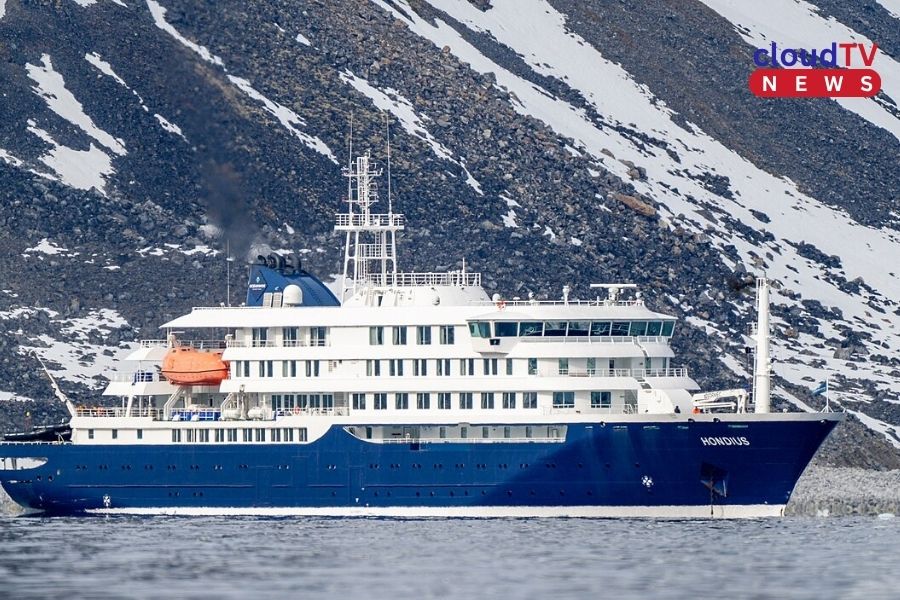
MV Hondius hantavirus outbreak


Cloud TV Desk: A major international health emergency unfolded in Spain’s Canary Islands after the cruise ship MV Hondius began evacuating passengers following a deadly hantavirus outbreak onboard.

The Dutch expedition vessel arrived near Tenerife on Sunday carrying around 146 passengers and crew after at least three people died and several others fell ill during the voyage. Medical teams in hazmat suits immediately began a tightly controlled evacuation and quarantine operation coordinated by Spanish authorities, the World Health Organization (WHO) and multiple international health agencies.
The outbreak reportedly began during the ship’s South Atlantic expedition voyage that started from Ushuaia in Argentina in April.
Health officials suspect the virus strain involved is the Andes hantavirus, a rare form capable of limited human-to-human transmission. Authorities believe the infection may have originated either during excursions in remote islands or from infected passengers who boarded earlier in the journey.
According to international reports, the first known victims included an elderly Dutch couple and another passenger who later died after developing severe respiratory complications. The WHO has confirmed multiple hantavirus cases linked to the ship, while investigations continue into how the virus spread onboard. As the ship approached Tenerife in Spain’s Canary Islands, Spanish health authorities launched a large-scale evacuation plan.
Passengers were screened individually before being removed from the vessel in small groups wearing protective gear. Spanish nationals were reportedly evacuated first and transported to military-linked medical facilities for quarantine and observation.
Other passengers from the United Kingdom, the Netherlands, Canada, Australia and several additional countries are also being repatriated under strict isolation protocols.
Reports indicate that around 30 crew members may remain onboard temporarily while the ship undergoes decontamination procedures before eventually returning to the Netherlands.
Hantavirus is a rare but potentially deadly virus usually spread through exposure to infected rodents, particularly their urine, saliva or droppings. In severe cases, it can lead to hantavirus pulmonary syndrome (HPS), a life-threatening respiratory disease.
Most hantavirus strains do not spread easily between humans. However, the Andes strain identified in parts of South America is known for limited person-to-person transmission, which has raised concern among global health authorities in the MV Hondius case.
WHO officials have nevertheless stressed that the overall risk to the wider public remains low.
Passengers onboard the MV Hondius had reportedly been confined to their cabins for several days as health authorities tried to contain the outbreak. Medical screening, sanitation measures and contact tracing operations were carried out while the ship travelled across the Atlantic toward Spain. Several passengers described the atmosphere onboard as tense and emotionally exhausting, though some others claimed the media coverage had amplified public fear around the outbreak. International authorities are now tracing passengers and crew members who may have disembarked earlier in different countries during the voyage.
The WHO, CDC and European public health agencies are closely monitoring the situation as the outbreak has already affected travellers from more than a dozen countries. Spain agreed to receive the ship after concerns were raised by several ports over the risk of infection. The Canary Islands operation is now being treated as one of the most complex maritime quarantine operations since the COVID-19 pandemic era.
Health experts say the long incubation period of hantavirus — sometimes up to several weeks — means passengers may continue to remain under observation even after returning to their home countries.







© Copyright 2026, cloudTV. All Rights Reserved