



Ceuta Migrant Crisis


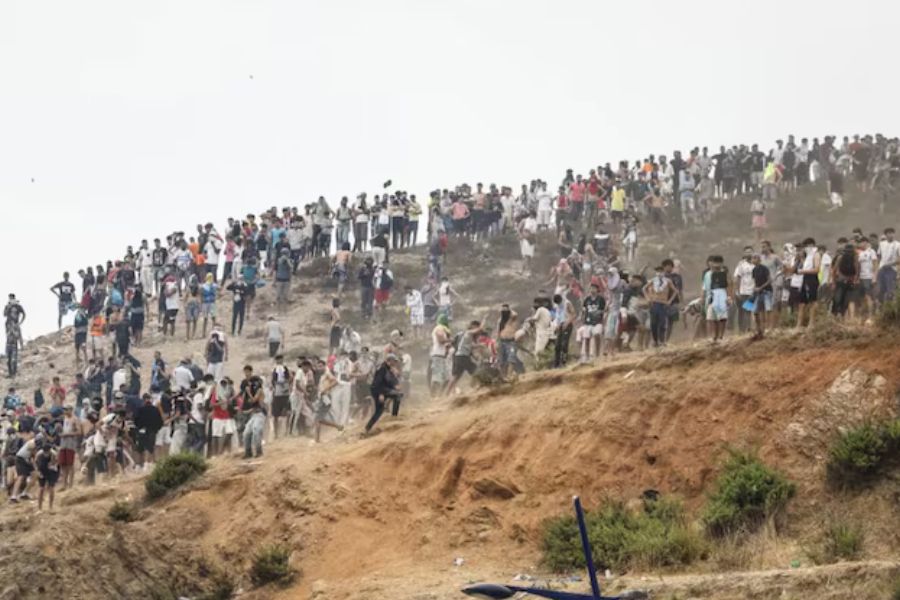
Spain’s North African enclave of Ceuta became the centre of one of Europe’s biggest migration emergencies after an estimated 50,000 to 60,000 migrants crossed from Morocco within just two days.

The unprecedented influx overwhelmed local authorities, triggered a humanitarian crisis, and reignited debates across Europe over border security and migration policy.
Ceuta is one of two Spanish territories located on the African continent and represents one of the European Union’s external land borders.
According to Spanish authorities, misinformation spread by human smuggling networks and social media convinced thousands that crossing into Ceuta would provide access to mainland Spain and the wider European Union.
Many migrants swam around breakwaters or crossed coastal sections of the border, while others entered through breaches in security barriers. The dangerous crossings resulted in dozens of deaths from drowning and stampedes.
Spain responded by deploying troops, police, drones, patrol boats and emergency personnel.
Within 48 hours, more than 48,000 migrants had either voluntarily returned or were sent back to Morocco, according to Spanish authorities. Officials stressed that irregular arrivals in Ceuta cannot automatically travel to mainland Spain because border controls remain in place.
To prevent another mass crossing, Spain also began installing a 500-metre floating sea barrier along part of the coastline.
The crisis quickly escalated into a diplomatic issue within the European Union.
Italy introduced additional border checks for travellers arriving from Spain, while more than 20 EU member states called for coordinated action to strengthen external border protection.
Spanish Prime Minister Pedro Sánchez blamed organised smuggling networks for encouraging the crossings and insisted that Spain’s immigration regularisation programme did not apply to newly arrived migrants. He urged European governments to respond collectively rather than taking unilateral measures.
The Ceuta crisis has once again highlighted the challenges facing Europe as it balances humanitarian obligations with border security and migration management.








© Copyright 2026, cloudTV. All Rights Reserved