


Jeff Bezos Liverpool


Liverpool have entered a new era in their ownership structure after a consortium led by British-Indian businessman Amit Bhatia completed an agreement to acquire around 30 percent of the Premier League club.

The investor group includes Amazon founder Jeff Bezos and Facebook co-founder Eduardo Saverin.
The deal is worth approximately £1.65 billion, valuing Liverpool at more than £5.2 billion. Fenway Sports Group, Liverpool’s controlling owner since 2010, will remain in control of the club.
The agreement marks one of the most significant ownership investments in English football in recent years.
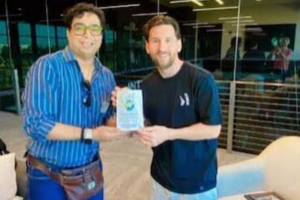
The consortium is led by Amit Bhatia, the British-Indian businessman and son-in-law of Indian steel billionaire Lakshmi Mittal.
Bhatia has previous experience in English football and was associated with Championship club Queens Park Rangers. His new role at Liverpool will go beyond that of a financial investor.
Under the new ownership structure, Bhatia is expected to become Liverpool’s vice-chairman and join the club’s board.
The investment group also includes Eduardo Saverin, one of the co-founders of Facebook.
The involvement of Bezos and Saverin gives the consortium a significant presence in the global technology and investment sectors.
Bezos is particularly prominent because of his status as the founder of Amazon and one of the world’s wealthiest entrepreneurs.
However, despite his involvement, Bezos will not take operational control of Liverpool. FSG will remain the club’s controlling shareholder.
The investment therefore represents a strategic minority partnership rather than a full takeover.
The financial scale of the agreement highlights the dramatic increase in Liverpool’s value since FSG acquired the club.
Fenway Sports Group bought Liverpool in 2010 for around £300 million. Sixteen years later, the club is being valued at more than £5.2 billion as part of the new investment agreement.
Liverpool’s sporting success has played a major role in that growth.
Under former manager Jurgen Klopp, the club won the Premier League and Champions League while significantly strengthening its global commercial profile.
Liverpool’s worldwide fanbase, commercial partnerships, broadcasting revenues and success in European football have all contributed to the club’s growing valuation.
The new investment could provide further opportunities in global commercial expansion and digital business.
The presence of major technology entrepreneurs in the ownership structure could also create opportunities around content, streaming, data and international audience development.
However, there has been no indication that the new investors will immediately change Liverpool’s footballing strategy.
FSG is expected to retain control over the club’s operations, including major sporting decisions. The investment is instead being presented as part of the group’s long-term strategy for Liverpool.
The arrival of Bezos, Saverin and Bhatia naturally raises questions about Liverpool’s long-term ownership.
For now, there is no full takeover.
The consortium has acquired a significant minority stake, while FSG continues to control the club. That distinction is important because early reports about the negotiations had generated speculation about a possible change of control at Anfield.
The completed transaction confirms that FSG remains firmly in charge for the moment.
At the same time, the investment gives Liverpool access to a powerful network of global business leaders.
Bhatia’s football background could be particularly relevant as he takes a more prominent role on the board.
Bezos brings enormous business and technology expertise, while Saverin adds another major international investor to the group.
For Liverpool supporters, the key question will be whether the new investment translates into long-term benefits for the club.
The ownership change does not currently mean that Liverpool will suddenly adopt a different transfer strategy or footballing philosophy.
Instead, it appears to be a strategic investment designed to strengthen the club’s financial and commercial position while allowing FSG to retain overall control.
The agreement nevertheless represents a major moment in Liverpool’s modern history.
A club that FSG bought for roughly £300 million in 2010 is now valued at more than £5.2 billion.
And one of the world’s most recognisable entrepreneurs, Jeff Bezos, is now part of its ownership story.
With Amit Bhatia taking the role of vice-chairman and Eduardo Saverin also joining the investment group, Liverpool’s ownership structure has become significantly more international.
The immediate future remains under FSG’s control. But the arrival of this new group could have a major influence on Liverpool’s commercial ambitions in the years ahead.








© Copyright 2026, cloudTV. All Rights Reserved