



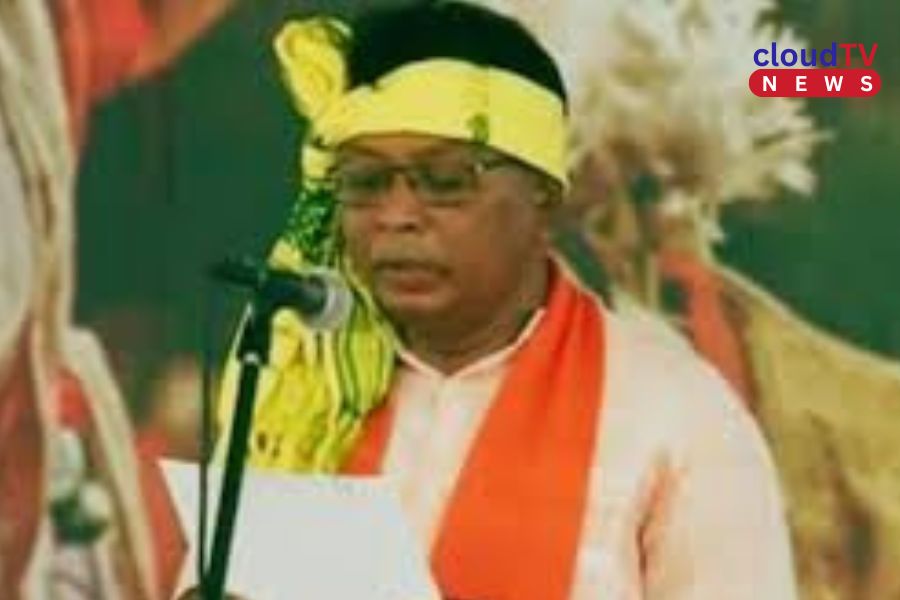
Khudiram Tudu Ranibandh


Cloud TV Desk: Once known for Maoist violence, political unrest and underdevelopment, the Junglemahal region of West Bengal is now witnessing a different political story. BJP leader Khudiram Tudu, who emerged from the tribal-dominated Ranibandh constituency in Bankura district, has now secured a place in the state cabinet.

For many residents of Junglemahal, Tudu’s rise symbolises the changing political landscape of the region. Political observers say his appointment carries both administrative and symbolic significance, especially in an area long associated with insurgency and neglect.
Ranibandh, located in Bankura district, was once one of the most disturbed areas of Junglemahal during the peak of Maoist activities in West Bengal. For years, the region witnessed insurgency, armed movement through forest areas and limited administrative access. During the Lalgarh movement and the broader Maoist unrest in western Bengal, large parts of Bankura, Purulia and West Midnapore remained politically volatile. Ranibandh was among the worst-affected zones.
Against that backdrop, Khudiram Tudu slowly built his political identity at the grassroots level.
Before entering active politics, he worked as a school teacher and remained closely connected with the tribal communities of the region. Over time, his popularity among local residents increased, especially among Santali-speaking voters and tribal families.
Khudiram Tudu contested the 2026 West Bengal Assembly election from the Ranibandh (ST) constituency as a BJP candidate and secured victory. His induction into the new state cabinet is being viewed as a significant political decision, especially because Junglemahal and tribal voters have become increasingly important in Bengal politics over the last decade.
During the swearing-in ceremony at Brigade Parade Ground, Tudu drew attention by taking oath in the Santali language. Political analysts described the gesture as an important assertion of tribal identity and cultural representation in state politics. Residents of Ranibandh say the region still struggles with poor infrastructure, healthcare, education and employment opportunities.
Many villages continue to face shortages of roads, drinking water facilities and proper medical services. As a result, expectations from Khudiram Tudu are extremely high. Locals hope his rise to ministerial office could finally bring stronger development initiatives to one of Bengal’s most neglected regions.
Political analysts believe Tudu’s inclusion in the cabinet is also part of a broader BJP strategy to strengthen its hold over tribal communities in Junglemahal.
The tribal belt of western Bengal has emerged as a key electoral battleground in recent years, with both BJP and Trinamool Congress aggressively targeting the region politically. By elevating a tribal leader from a remote Maoist-affected constituency, the BJP appears to be sending a strong message about representation and regional empowerment. Experts say Khudiram Tudu’s political journey reflects how Junglemahal’s narrative is gradually shifting from insurgency and violence towards mainstream political participation and governance.








© Copyright 2026, cloudTV. All Rights Reserved