


Bankipur Bypoll BJP


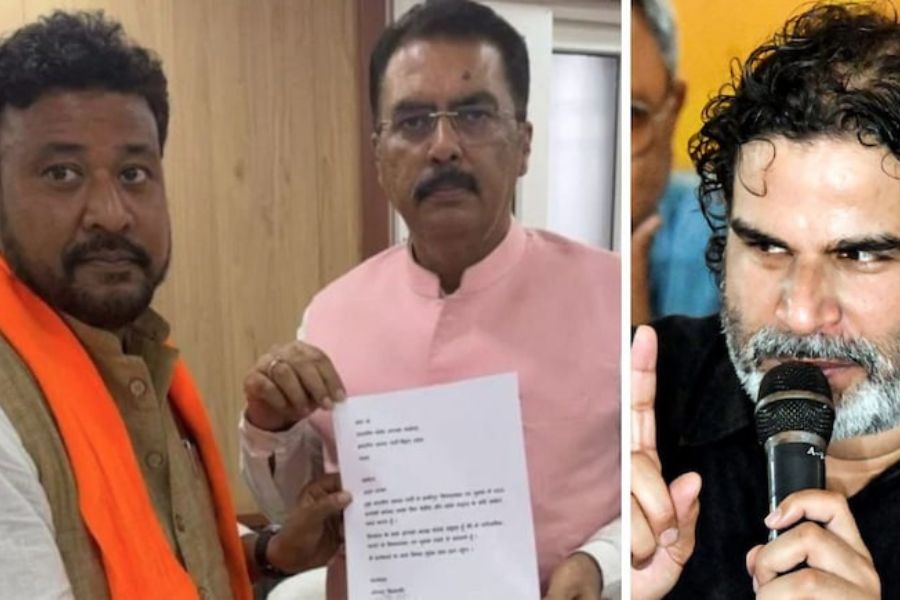
Cloud TVDesk: Bihar politics has taken a dramatic turn ahead of the high-profile Bankipur Assembly by-election, with the Bharatiya Janata Party (BJP) making a last-minute change to its candidate. The party replaced its originally announced nominee, Abhishek Kumar Sinha (Bunty), with Neeraj Kumar Sinha, triggering widespread political speculation. The unexpected decision has gained further attention after reports highlighted Neeraj Sinha’s past political association with Rashtriya Janata Dal (RJD) chief Lalu Prasad Yadav, making the contest against Jan Suraaj Party founder Prashant Kishor even more intriguing.

The Bankipur bypoll has become one of the most closely watched political battles in Bihar, as it marks Prashant Kishor’s first major electoral contest after launching his Jan Suraaj Party. Political observers believe the outcome could significantly influence Bihar’s political landscape ahead of future elections.
The BJP had initially fielded Abhishek Kumar Sinha, a prominent leader of the BJP Yuva Morcha. He filed his nomination papers in the presence of senior NDA leaders. However, within a day, he unexpectedly withdrew his nomination, officially citing “family reasons.”
Soon afterward, the BJP announced Neeraj Kumar Sinha as its new candidate for the prestigious Bankipur seat. The sudden replacement immediately became a major political talking point, with opposition parties questioning the reasons behind the move.
According to political analysts, the BJP may have reassessed the electoral dynamics of Bankipur and opted for a candidate perceived to have broader local acceptability and stronger organizational connections.
One of the biggest talking points surrounding the candidate switch is Neeraj Kumar Sinha’s reported political past.
According to NDTV, Neeraj Sinha had earlier been associated with political circles linked to RJD supremo Lalu Prasad Yadav before joining the BJP. Although the BJP has not officially linked the candidate change to this background, the revelation has intensified political debate in Bihar.
Opposition leaders argue that the BJP’s decision reflects nervousness ahead of the by-election, while BJP leaders maintain that the candidate replacement is purely an internal organizational decision aimed at strengthening the party’s chances.
Political experts note that Bihar’s elections are often influenced by local social equations, caste dynamics, and personal political networks. These factors may have played a role in the party’s final choice.
The by-election is particularly significant because it marks Prashant Kishor’s first direct electoral battle after years of working as one of India’s most successful political strategists.
Kishor has described the Bankipur bypoll as a “referendum” on the performance of the BJP-led NDA government in Bihar. Following the BJP’s candidate change, he claimed the ruling party appeared to be under pressure and insisted that no constituency should be considered the permanent stronghold of any political party.
The Bankipur seat became vacant after senior BJP leader Nitin Nabin was elected to the Rajya Sabha earlier this year. The BJP has traditionally maintained a strong presence in the constituency, making the bypoll a crucial prestige battle for the ruling alliance.
With Prashant Kishor seeking to establish himself as a credible political leader and the BJP determined to retain one of its traditional bastions, the contest has evolved into much more than a routine by-election.
Political observers believe the result could shape the narrative ahead of Bihar’s future electoral battles while also testing the electoral appeal of Jan Suraaj beyond political messaging and grassroots campaigns.
As campaigning intensifies, all eyes will remain on Bankipur, where strategy, political history, and leadership credibility are set to collide in one of Bihar’s most closely watched electoral contests.








© Copyright 2026, cloudTV. All Rights Reserved