



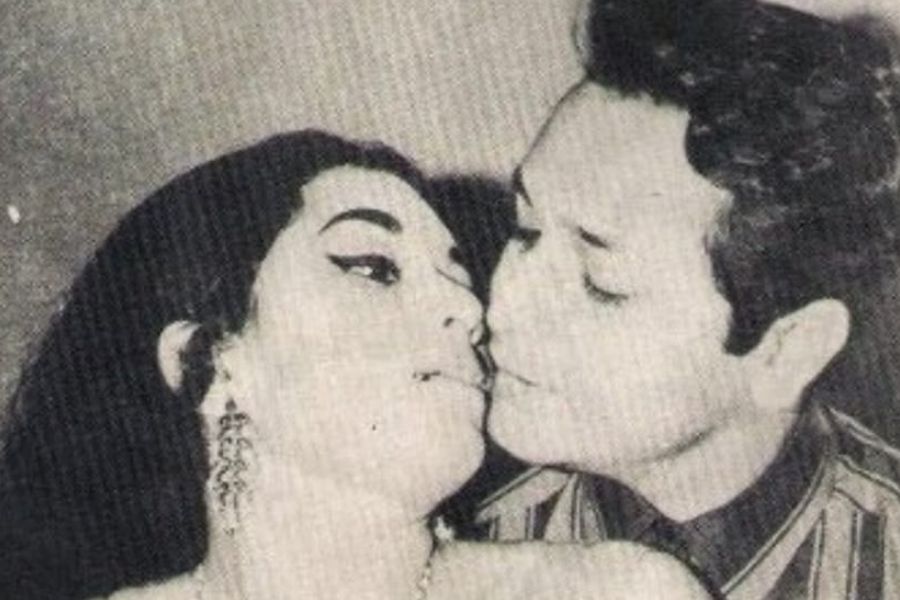
Rekha Biswajeet Kiss Controversy


Cloud TV Entertainment Desk: A decades-old Bollywood controversy involving veteran actress Rekha and actor Biswajeet Chatterjee has resurfaced, reigniting discussions about consent and professional ethics in the film industry. The incident dates back to 1969 during the filming of Anjana Safar, a movie that was later released under the title Do Shikaari.

According to accounts published over the years, a kissing scene between Biswajeet and a teenage Rekha was filmed without her prior knowledge. Reports indicate that the sequence was planned by members of the production team in advance, but Rekha was not informed about the details. At the time, she was only around 15 years old and was still in the early stages of her film career.
The scene later generated significant publicity and became one of the most discussed moments associated with the film. Photographs from the sequence were widely circulated and even appeared in international publications, drawing attention to the young actress. However, the publicity overshadowed the emotional impact the incident reportedly had on her.
Years later, Rekha reflected on the experience in an interview with journalist Dinesh Raheja. She said she had been completely taken by surprise and emphasized that no amount of publicity or recognition could erase the discomfort and distress she felt during the incident. Her comments have since been cited as an important example of how performers, particularly young actresses, were often treated in an era when discussions about consent were largely absent from mainstream filmmaking.
The controversy returned to public discussion recently after comments from Biswajeet’s daughter, actress Pallavi Chatterjee. While acknowledging that consent should have been obtained before filming such a scene, she argued that responsibility did not rest solely with her father and reflected broader practices within the film industry at the time.
Today, the episode is increasingly viewed through the lens of consent, workplace dignity, and performer rights. Industry observers note that the incident serves as a reminder of how standards in filmmaking have evolved and why clear consent protocols are now considered essential in film and television production.








© Copyright 2026, cloudTV. All Rights Reserved