



Nuclear Bomber Crash


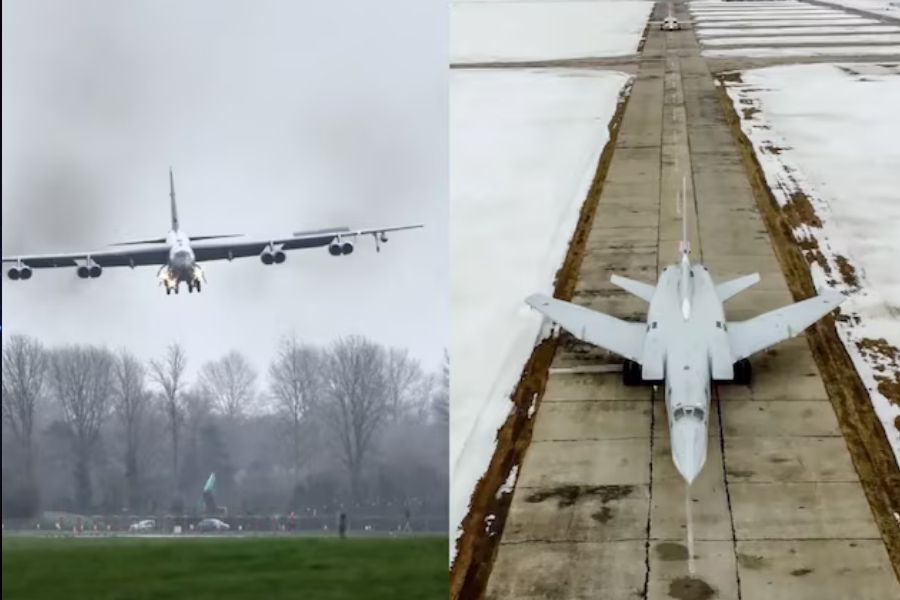
Cloud TV Desk: In a remarkable coincidence, two of the world’s most recognizable nuclear-capable bombers—America’s B-52 Stratofortress and Russia’s Tu-22M3—were involved in separate crashes on the same day (Nuclear Bomber Crash) , drawing attention from defense analysts and military observers worldwide.

According to reports, a Russian Tu-22M3 strategic bomber crashed during a routine training mission in the Irkutsk region of Siberia. Russia’s Defense Ministry said the aircraft went down due to a suspected technical malfunction. The four crew members reportedly managed to eject safely before the crash. Initial investigations point to an engine-related failure as the likely cause of the accident.
The Tu-22M3, known by NATO as the “Backfire,” is a long-range supersonic bomber that forms an important part of Russia’s strategic strike capability. The aircraft is capable of carrying cruise missiles and other advanced weapons and has been used extensively in military operations in recent years.
On the same day, a US Air Force B-52 Stratofortress was also involved in an accident. The B-52 remains one of the most important pillars of America’s long-range strategic deterrence and has served the US military for decades. Authorities have launched investigations into the incident, although officials have not suggested any connection between the two crashes.
Military experts note that both aircraft are based on designs that have been in service for several decades. While both fleets have undergone continuous modernization and upgrades, aging airframes and complex maintenance requirements remain ongoing challenges.
The coincidence of two strategic bombers from rival Cold War powers crashing within hours of each other has sparked discussions about fleet sustainability, maintenance standards, and operational readiness. Analysts emphasize that there is currently no evidence linking the two incidents, and both appear to be unrelated accidents.
The crashes come at a time when both Washington and Moscow continue to rely on their long-range bomber fleets as key components of their national defense strategies. As investigations continue, defense experts will be closely watching the findings to determine whether broader safety concerns need to be addressed.
Although no nuclear weapons were involved in either incident, the accidents have highlighted the importance of maintaining some of the world’s most critical military aircraft as geopolitical tensions remain high across several regions.








© Copyright 2026, cloudTV. All Rights Reserved