



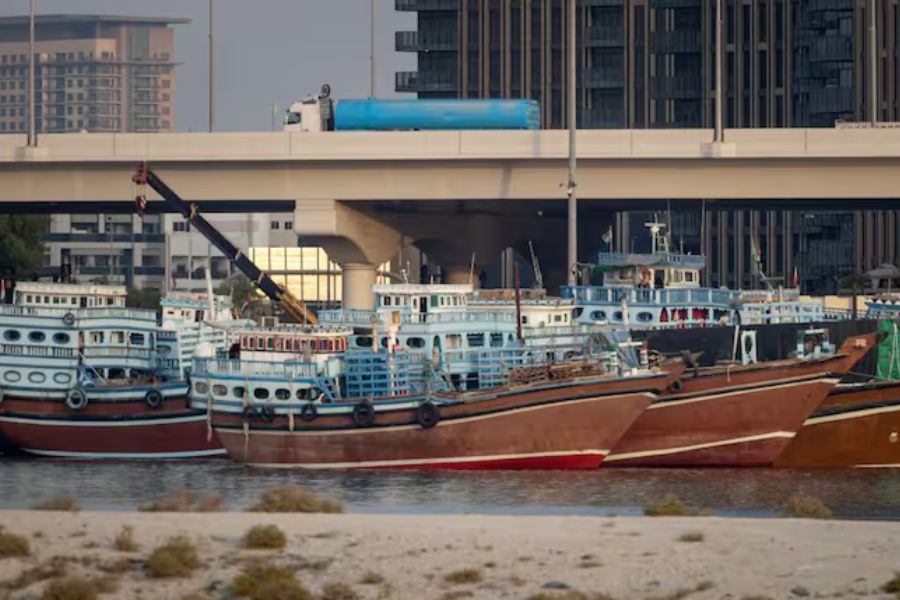
UAE Iran Trade


The United Arab Emirates has suspended all trade, commercial exchanges and financial transactions with Iran until further notice, marking another major deterioration in relations between the two countries. The decision came after the UAE accused Iran of launching two ballistic missiles towards the Gulf state. Tehran has categorically denied the allegation.

The UAE Defence Ministry said its air defence systems detected two ballistic missiles launched from Iran. According to the Emirati authorities, the missiles were targeting maritime navigation.
One missile reportedly fell outside UAE territorial waters, while the second fell within the country’s territorial waters. A subsequent assessment by the UAE said both missiles had been targeting maritime navigation and ultimately fell into the sea.
The incident triggered a brief emergency alert for UAE residents. People were warned of a potential missile threat and advised to move to the nearest secure building. The alert was lifted shortly afterwards.
The incident is significant because it comes amid a broader escalation across the Gulf and growing tensions surrounding shipping routes and maritime security.
Iranian Foreign Ministry spokesman Esmaeil Baqaei rejected the UAE’s accusation. He said Tehran had not launched a missile towards the UAE and described the claim as damaging to regional trust and security efforts.
Following the missile incident, the UAE announced the suspension of all trade and financial dealings with Iran.
Afra Al Hameli, director of strategic communications at the UAE Foreign Ministry, said the move was prompted by regional developments that threaten regional and international peace and security. The suspension will remain in place until further notice.
The decision could have significant implications for businesses operating between the UAE and Iran. Dubai has historically been an important commercial hub for Iranian businesses and trade. A broad suspension of commercial and financial activity could therefore create additional pressure on cross-border trade.
The announcement also follows a series of incidents involving UAE-linked shipping. The UAE has accused Iran of attacking vessels connected to Abu Dhabi National Oil Company, or ADNOC, in the Strait of Hormuz. Iran has rejected accusations surrounding the broader escalation.
The latest decision therefore represents more than a temporary diplomatic disagreement. It signals a major setback to economic engagement between Abu Dhabi and Tehran.
The latest escalation has also increased attention on the Strait of Hormuz, one of the world’s most important maritime routes for energy shipments.
Iran has said the waterway will remain closed until it reaches a peace agreement with the United States. The UAE, meanwhile, depends heavily on maritime routes through the Gulf for international trade and energy exports.
Any prolonged disruption in the Strait of Hormuz could have consequences far beyond the Middle East. Oil and gas shipments could face delays, while shipping costs and insurance premiums could rise.
The UAE has nevertheless reiterated its commitment to dialogue, cooperation and regional integration. Abu Dhabi has also stressed the importance of protecting the international financial system and maintaining freedom of navigation.
The immediate focus will now remain on Tehran’s response and whether the latest dispute leads to further military or economic escalation. If tensions continue to rise, the consequences could extend to regional trade, energy markets and global shipping.








© Copyright 2026, cloudTV. All Rights Reserved