



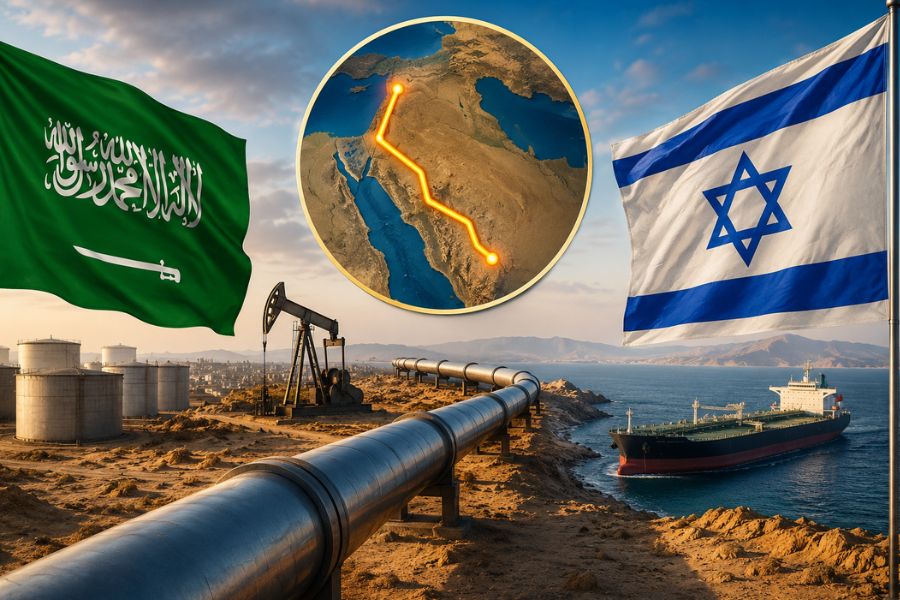
Secret Oil Pipeline


Escalating tensions in the Middle East have renewed attention on an unlikely piece of energy infrastructure—a decades-old oil pipeline originally built through cooperation between Israel and Iran. As threats to shipping in the Strait of Hormuz and the Red Sea increase, analysts believe the historic route could become strategically important for Saudi Arabia’s oil exports to Europe.

The Eilat-Ashkelon pipeline was constructed in the late 1960s when Iran and Israel maintained close diplomatic ties under the Shah. The project allowed Iranian crude to move from the Red Sea to the Mediterranean, creating an alternative route that bypassed the Suez Canal.
Following the 1979 Iranian Revolution, relations between the two countries collapsed and the pipeline’s original purpose disappeared. However, the infrastructure remains operational under Israeli management and continues to attract attention whenever regional shipping routes face disruption.
Saudi Arabia’s oil exports traditionally depend on maritime routes through the Strait of Hormuz and the Red Sea. However, recent conflict, attacks on shipping and regional instability have increased concerns over the security of these critical waterways.
Although Saudi Arabia operates its own East-West Pipeline linking its eastern oil fields to the Red Sea port of Yanbu, analysts say the route cannot fully replace exports through Hormuz if disruptions become prolonged. This has prompted renewed discussion about additional bypass options that could connect Gulf oil to Mediterranean markets.
Energy experts warn that any extended disruption to Middle Eastern oil transport could have significant consequences for global crude prices and supply chains. Alternative pipeline networks may help reduce some pressure, but they cannot completely replace the enormous volume of oil normally shipped through the Strait of Hormuz.
The renewed focus on the old Israel-Iran pipeline illustrates how historical infrastructure can gain fresh strategic importance during geopolitical crises. Whether Saudi Arabia ultimately relies on such routes remains uncertain, but the discussion highlights the urgent search for secure energy corridors as instability continues across the region.







© Copyright 2026, cloudTV. All Rights Reserved