


West Bengal investment


West Bengal needs an investment that is not merely large in monetary terms but also significant enough to reshape perceptions of the state’s economy, Finance Minister Swapan Dasgupta said at a thematic seminar on trade, investment and enterprise in Kolkata.

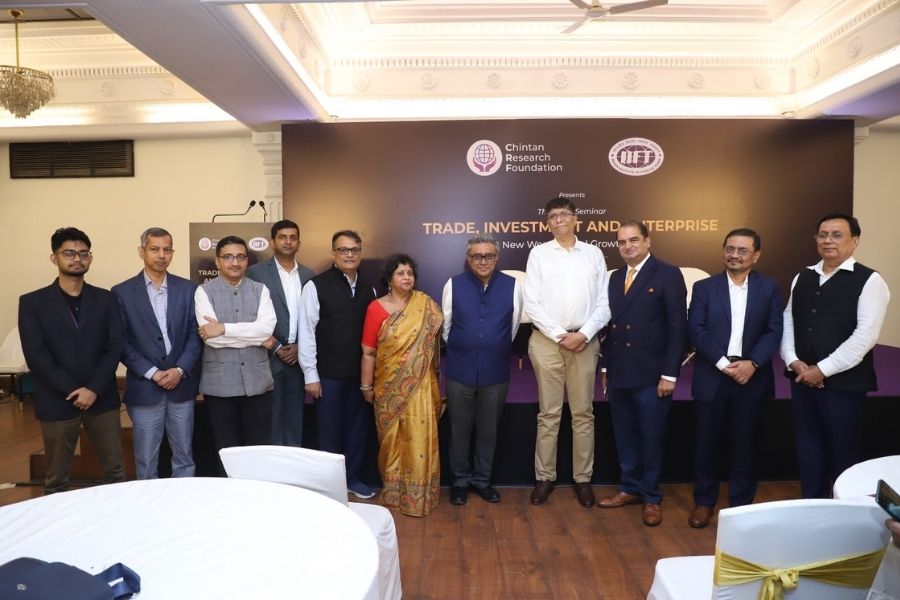
The seminar, jointly organised by the Chintan Research Foundation (CRF) and the Indian Institute of Foreign Trade (IIFT) on September 10, 2026, examined West Bengal’s investment environment, infrastructure, enterprise ecosystem and prospects for renewed economic growth.
Dasgupta placed West Bengal’s current economic position in historical perspective, noting that the state had been at the forefront of India’s economic development through the 1960s and into the early 1970s.
The state subsequently went through a prolonged period of decline. According to the minister, the legacy of that period continues to influence perceptions of West Bengal and has contributed to a credibility gap that needs to be addressed if the state is to attract fresh investment.
One of the central concerns highlighted by Dasgupta was investor confidence. He pointed to instances in the past when investment incentives were offered and subsequently withdrawn, arguing that such developments had damaged the state’s credibility with investors.
He stressed that rebuilding trust must therefore be at the heart of the state’s investment strategy. Government commitments, he said, must be backed by genuine implementation and consistency.
The minister also identified institutional reluctance to take risks as another challenge. According to him, risk aversion has influenced both public perceptions and sections of the state bureaucracy.
He contrasted this with what he described as more flexible administrative approaches in states such as Maharashtra and Gujarat, suggesting that West Bengal needs a more efficient and investor-friendly administrative environment.
West Bengal also needs to strengthen its export competitiveness, Dasgupta said. Complex regulatory requirements and the relatively slow development of design and innovation capabilities have constrained the state’s ability to move towards higher-value manufacturing.
The challenge, therefore, is not simply to increase production but to build capabilities in technology, design, innovation and quality that can help West Bengal compete more effectively in global markets.
The minister also pointed to gaps in West Bengal’s education and skills ecosystem. He cited states such as Tamil Nadu and Maharashtra, where private universities and leading technical institutions have contributed to stronger talent ecosystems.
A significant amount of talent educated in West Bengal subsequently finds better opportunities elsewhere. At the same time, Dasgupta highlighted the global success of people of Bengali origin in the technology industry, describing the diaspora as an underutilised economic asset for the state.
Land availability remains a genuine constraint for investment, Dasgupta acknowledged, although he argued that the issue is sometimes overstated.
The more significant obstacle, he suggested, is often the legal and procedural complexity surrounding the transfer of land. Simplifying these processes could make it easier to facilitate industrial and investment projects.
Looking ahead, Dasgupta identified three potential sources of renewed investment in West Bengal.
These include overseas investors with longstanding links to the region, industrial companies already operating in the state, and members of the Bengali diaspora who moved away in previous decades and may now consider returning through smaller, carefully planned investments.
The minister pointed to Japanese investment in India as an example of a long-term, relationship-oriented approach. Such investments, he suggested, are built around sustained partnerships rather than short-term returns.
He also referred to the early development of India’s software industry, arguing that the absence of a rigid policy framework at that stage allowed the sector to develop organically. The broader lesson, he suggested, is that flexibility can sometimes encourage growth more effectively than excessive regulation.
Dasgupta called for patience while the state’s new investment policies are being developed, while simultaneously emphasising that the government must demonstrate genuine commitment to its promises.
He argued that India’s wider investment environment has moved in a more productive direction in recent years. West Bengal, he said, now has an opportunity to move beyond the negativity associated with earlier periods and pursue more meaningful investment-led growth.
The minister’s address followed the seminar’s opening session, which examined West Bengal’s performance in trade, investment and enterprise within the state’s broader development narrative. A fireside chat also explored the state government’s approach to industry and enterprise policy.
The first thematic session focused on ports, roads, railways and logistics infrastructure, along with recent investment trends and ways to convert West Bengal’s geographical advantages into sustained capital inflows and industrial growth.
The second session examined the informal economy and the state’s MSME base, with discussions centred on formalisation, access to credit and stronger integration between small businesses and wider trade and investment flows.
The seminar is expected to contribute to a policy paper containing specific recommendations on logistics, investment facilitation and MSME support.









© Copyright 2026, cloudTV. All Rights Reserved