


No Insurance Fuel


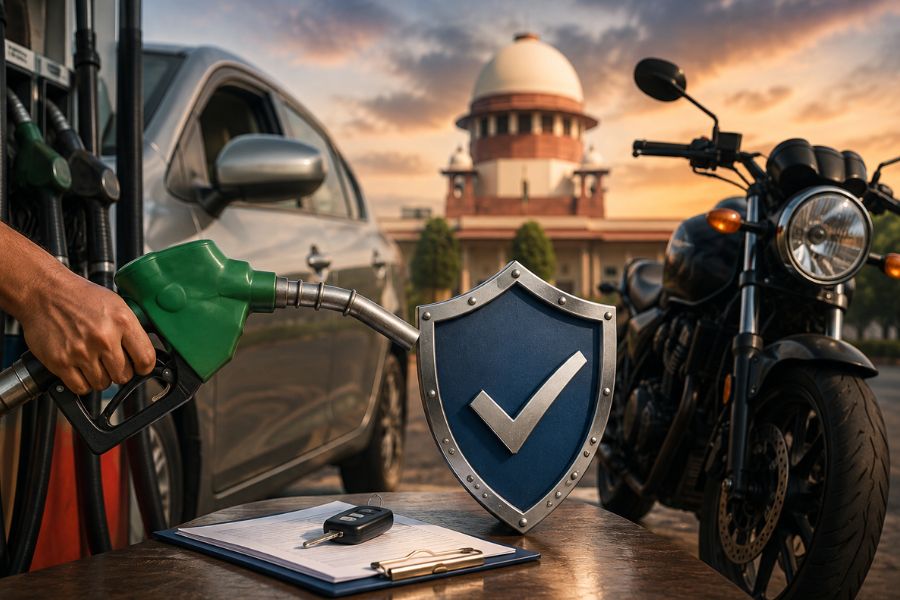
The Supreme Court of India has suggested that the Central Government examine the feasibility of introducing a pilot project under a “No Insurance, No Fuel” policy to improve compliance with motor vehicle insurance requirements.

According to observations made during proceedings, nearly 56% of vehicles in India are currently operating without valid insurance, raising serious concerns over road safety and compensation for accident victims.
The proposal recommends that fuel stations verify whether a vehicle has valid insurance before supplying petrol or diesel. If implemented as a pilot, vehicles without active insurance could be denied fuel until their policies are renewed.
At present, this is only a recommendation for a pilot project and not an approved nationwide rule.
The Supreme Court has also suggested strengthening insurance enforcement on public roads.
It has recommended exploring digital tools that would allow traffic police officers to instantly verify the insurance status of vehicles during routine checks, highway inspections, and traffic enforcement drives.
The Court believes stricter verification could significantly reduce the number of uninsured vehicles and improve compliance with motor vehicle regulations.
The proposal also discusses extending the mandatory third-party insurance period for motorcycles from five years to six years, while newly purchased private cars currently require a three-year third-party insurance policy.
The Court emphasized that motor insurance plays a critical role in protecting accident victims and ensuring financial compensation.
With more than half of India’s vehicles reportedly uninsured, authorities believe stronger enforcement mechanisms may encourage vehicle owners to renew insurance on time.
Legal experts note that the proposal is currently at the consultation stage and that any nationwide implementation would require policy decisions by the Central Government.
If introduced, the pilot project could become one of the most significant road safety initiatives aimed at increasing insurance coverage across the country.
For now, motorists are not affected by any new rule, but the discussion has sparked nationwide debate about balancing public convenience with road safety and legal compliance.








© Copyright 2026, cloudTV. All Rights Reserved