


NALSAR Protest


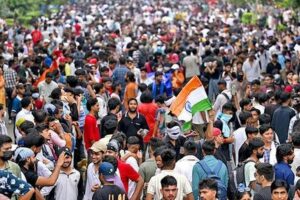
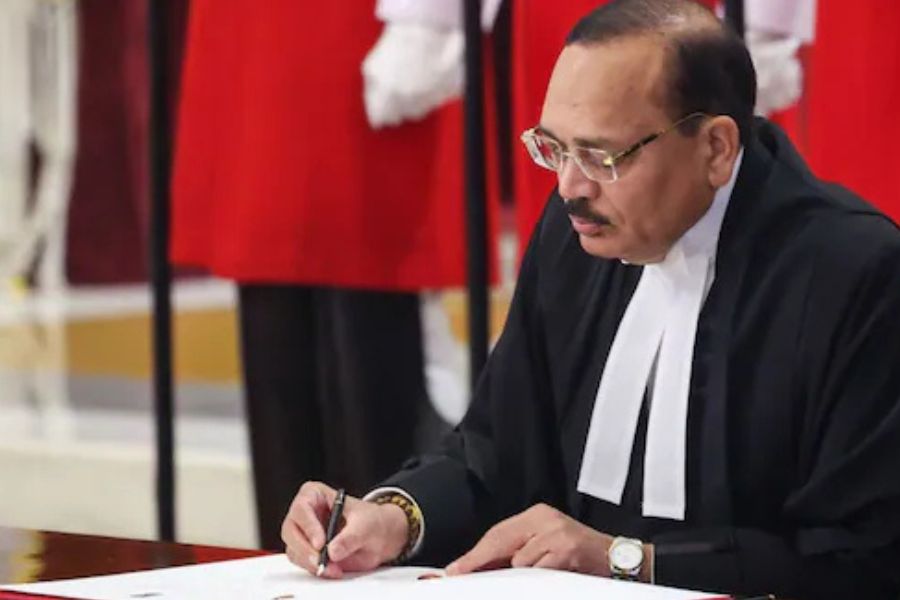
The Supreme Court on Friday strongly questioned the Bar Council of India’s intervention in the NALSAR University of Law student protest, with Chief Justice of India Surya Kant saying that students have the right to protest peacefully.

The controversy began after students at the Hyderabad-based National Academy of Legal Studies and Research opposed the invitation extended to CJI Surya Kant to attend their convocation as chief guest.
The Bar Council of India subsequently directed State Bar Councils not to enrol graduates from NALSAR’s 2026 batch as advocates until further orders.
The decision triggered widespread criticism and was withdrawn within hours.
The Supreme Court has now sought a response from the BCI and directed that no punitive action be taken against NALSAR students or faculty members in connection with the controversy.
A bench headed by CJI Surya Kant, along with Justices Joymalya Bagchi and V Mohana, heard the matter after a plea challenging the BCI’s circular was mentioned for urgent listing.
The Chief Justice strongly criticised the BCI’s intervention.
He said the matter was essentially a dialogue between him and the students and questioned why the Bar Council had intervened.
The CJI also referred to his own student days, saying that he had actively participated in student activities.
The court emphasised that students have a right to express their views and protest peacefully.
Even if a young person makes an incorrect statement, the court observed, that does not automatically justify punitive action.
The central message from the bench was that lawful and peaceful dissent cannot by itself become a basis for professional punishment.
The court’s intervention came after the BCI had already withdrawn the circular.
The BCI counsel informed the bench that the impugned circular had been withdrawn.
However, the Supreme Court still sought a response from the Council regarding the circumstances and basis of its earlier action.
The controversy escalated on Thursday when the BCI directed all State Bar Councils not to enrol any graduate from NALSAR’s 2026 batch as an advocate until further orders.
The decision was linked to an alleged campaign by students opposing CJI Surya Kant’s participation in the university’s convocation.
The BCI had also sought a factual report from the university’s Vice-Chancellor identifying those who had initiated, organised or mobilised the campaign.
The blanket restriction on the entire graduating batch, however, attracted sharp criticism.
Supreme Court Bar Association President and senior advocate Vikas Singh described the move as arbitrary, illegal and disproportionate.
He argued that students should not be threatened with denial of entry into the legal profession simply because they disagreed with a constitutional authority.
He also emphasised the importance of universities as spaces for free thought and debate.
The BCI subsequently withdrew its enrolment restriction.
The Council later stated that its proceedings against the 2026 batch had been closed after it found that the students as a group had no role in the alleged disturbance or movement.
The Council also advised students that they were free to express their views, while stressing the importance of institutional discipline and decorum.
The Supreme Court has now ordered that no punitive action be taken against NALSAR students or faculty members by the BCI or any State Bar Council in relation to the incidents referred to in the BCI communications.
The court has issued notice to the BCI and asked it to file its response.
The matter will be heard again after two weeks.
The case raises significant questions about the boundaries between professional regulation, academic freedom and the right to dissent.
The BCI is the apex regulatory body for the legal profession in India. Its role includes regulating entry into the legal profession and maintaining professional standards.
However, the Supreme Court’s observations indicate that regulatory authority cannot automatically be used to penalise students for peaceful political or institutional dissent.
The NALSAR controversy is particularly significant because the students’ disagreement was directed at the proposed participation of the sitting Chief Justice of India in their convocation.
The court has not treated disagreement with a constitutional authority as sufficient grounds for professional punishment.
At the same time, the BCI has stressed that students should express their views within the framework of institutional discipline and decorum.
The issue therefore involves a balance between two principles: the right of students to express disagreement and the responsibility of educational institutions and professional bodies to maintain standards of conduct.
For now, the immediate threat to the NALSAR 2026 batch’s professional enrolment has been removed.
The Supreme Court’s intervention has also prevented punitive action against students and faculty at the instance of the BCI or State Bar Councils.
The next stage will depend on the BCI’s response and the Supreme Court’s consideration of the matter after two weeks.
The case could have wider implications for law students and professional regulatory bodies across India, particularly when student protests involve disagreement with senior constitutional or judicial authorities.








© Copyright 2026, cloudTV. All Rights Reserved