


Meta Safe Harbour


The Indian government has issued a strong warning to Meta after a video featuring Prime Minister Narendra Modi was reportedly removed from Facebook, triggering a political controversy. According to government representatives, Meta has been given three days to address the issue, with demands that CEO Mark Zuckerberg personally apologize for the incident.

The controversy began after a selfie-style video created for Gen-Z audiences disappeared from Facebook. Meta later stated that the removal resulted from a technical error and publicly apologized. However, Indian authorities have maintained that the apology is insufficient.
Nishikant Dubey, Chairman of the Parliamentary Standing Committee on Information Technology, said that the Prime Minister represents 1.4 billion Indians and that removing content published by the country’s leader raises serious concerns. He also called for disciplinary action against those responsible for the takedown.
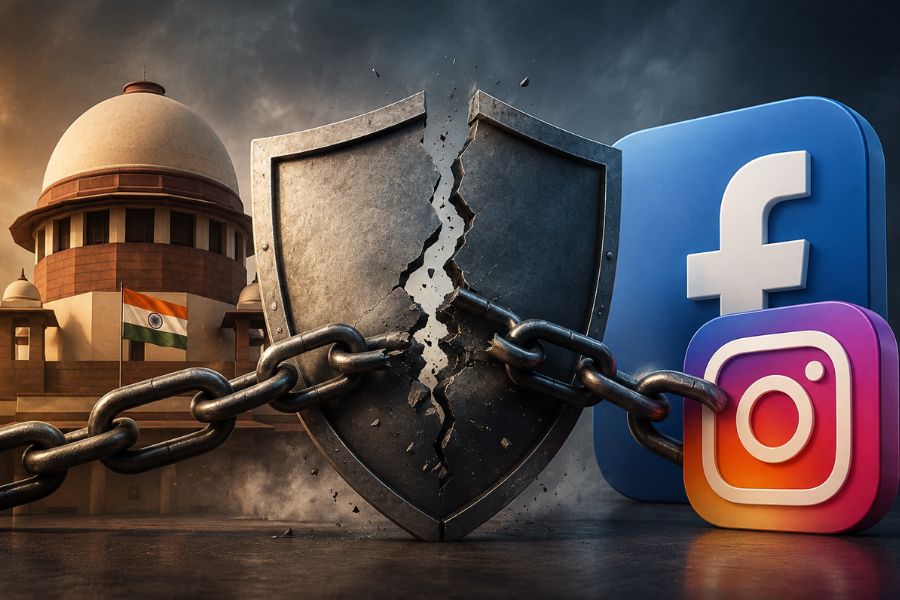
The government’s warning centers on the possible withdrawal of Meta’s “safe harbour” protection under Section 79 of India’s Information Technology Act.
Safe harbour shields intermediary platforms such as Facebook and Instagram from legal liability for content posted by third-party users, provided they comply with due diligence requirements under Indian law.
If this legal protection is withdrawn, Meta could become directly exposed to lawsuits and legal action related to user-generated content on its platforms. Legal experts believe such a move would significantly increase the company’s compliance obligations and litigation risks in India.
The issue has therefore become much larger than a single video, with broader implications for how global technology companies operate in one of their biggest markets.
Despite widespread speculation on social media, the government has not announced any ban on Facebook or Instagram.
The current dispute concerns Meta’s legal protections rather than an immediate shutdown of its services. Even if safe harbour protections were to be reviewed or limited, it would not automatically result in Facebook or Instagram becoming unavailable in India.
Industry observers note that any decision affecting Section 79 would likely have significant legal and commercial consequences and could reshape the regulatory environment for digital platforms.
For now, attention remains on Meta’s response and the government’s next move. Whether the dispute is resolved through dialogue or escalates into legal proceedings could influence future relations between India’s regulators and global technology companies.








© Copyright 2026, cloudTV. All Rights Reserved