


Chikungunya Cases


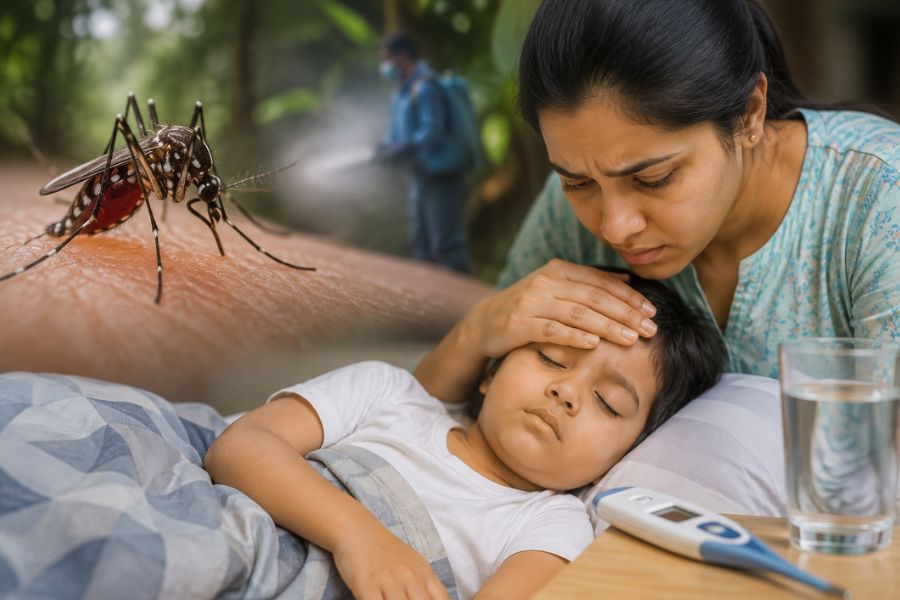
Health authorities and doctors have issued a warning as chikungunya cases continue to rise in Kerala during the monsoon season. Parents have been advised to closely monitor children for early symptoms and seek medical attention without delay if warning signs appear.

Doctors say early diagnosis can significantly reduce complications, while delayed treatment may lead to prolonged joint pain, dehydration and weakness.
According to medical experts, children infected with chikungunya usually develop a sudden high fever, often above 102°F.
Other common symptoms include severe joint pain, body aches, headache, skin rashes, vomiting, fatigue and loss of appetite.
Young children may not always be able to explain their pain. Refusing to walk, excessive crying or reluctance to move their limbs can also indicate serious discomfort requiring immediate medical evaluation.
The rise in infections is linked to the monsoon season, which creates ideal breeding conditions for Aedes aegypti and Aedes albopictus mosquitoes.
Stagnant water in flower pots, discarded tyres, rooftop containers, air-conditioner trays and construction sites provides breeding grounds for these mosquitoes.
Health officials are urging communities to eliminate standing water and strengthen mosquito-control measures to limit the spread of the disease.
Doctors recommend seeking professional medical advice as soon as fever develops instead of relying on self-medication.
Children should remain well hydrated with water and oral rehydration solutions. Parents are also advised to use mosquito nets, dress children in full-sleeved clothing and apply child-safe mosquito repellents.
There is currently no specific antiviral treatment for chikungunya. Medical care focuses on relieving symptoms while preventing complications through timely diagnosis and supportive treatment.
Public health experts stress that prevention remains the most effective strategy during the ongoing rise in cases.







© Copyright 2026, cloudTV. All Rights Reserved