



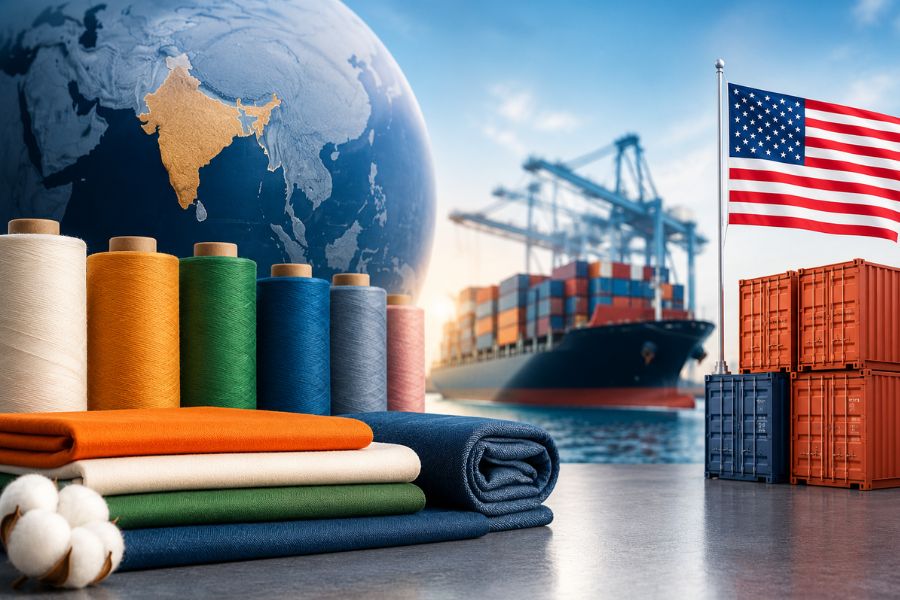
India Textile Exports


India’s textile and apparel industry may receive a timely boost following the latest US tariff revisions. While the new tariff structure appears to place India in a relatively stronger position compared to some competing manufacturing nations, experts caution that tariffs alone will not determine future export success.

India remains one of the world’s largest producers of cotton and textiles, yet it has struggled to match the export performance of countries such as China, Bangladesh and Vietnam in several product categories. The latest changes could improve India’s competitiveness in the American market, especially in garments, home textiles and technical textiles.
Industry analysts believe global buyers may diversify sourcing to reduce dependence on a limited number of manufacturing hubs. This creates an opportunity for Indian exporters to secure larger orders.
However, businesses must overcome several long-standing challenges. Higher logistics costs, longer delivery timelines, fragmented manufacturing capacity and compliance requirements continue to affect India’s competitiveness. Buyers increasingly prioritize reliability, sustainability and quality alongside pricing.
Experts also stress that India must continue investing in modern manufacturing technologies, automation and environmentally sustainable production methods to meet evolving global standards.
Another important factor is India’s trade policy. Several competing textile-exporting countries benefit from preferential trade agreements with major importing nations. Industry leaders argue that expanding free trade agreements could significantly improve India’s market access and strengthen export growth.
In addition, improving infrastructure, simplifying export procedures and enhancing supply chain efficiency will be critical if India wants to capitalize on the current opportunity.
The textile sector is one of India’s largest employers, supporting millions of jobs directly and indirectly. Higher exports could boost employment, increase foreign exchange earnings and strengthen the country’s manufacturing ecosystem.
Despite the positive outlook created by the new US tariff structure, analysts emphasize that there is no automatic path to becoming the world’s leading textile exporter. Competitive pricing, consistent quality, faster production cycles and strong international partnerships will remain decisive factors.
The tariff advantage provides India with an opportunity rather than a guarantee. Whether the country can convert that advantage into sustained export leadership will depend on policy reforms, industry investments and the ability of manufacturers to respond quickly to changing global demand.
If India succeeds in addressing these structural challenges, the coming years could mark a significant shift in its position within the global textile industry.








© Copyright 2026, cloudTV. All Rights Reserved