



Human Animal Conflict


Madhya Pradesh, India’s most important tiger landscape, is facing a disturbing human-wildlife conflict. According to the latest figures available with the Madhya Pradesh Forest Department, 50 people were killed in attacks by wild animals during the first eight months of 2026.

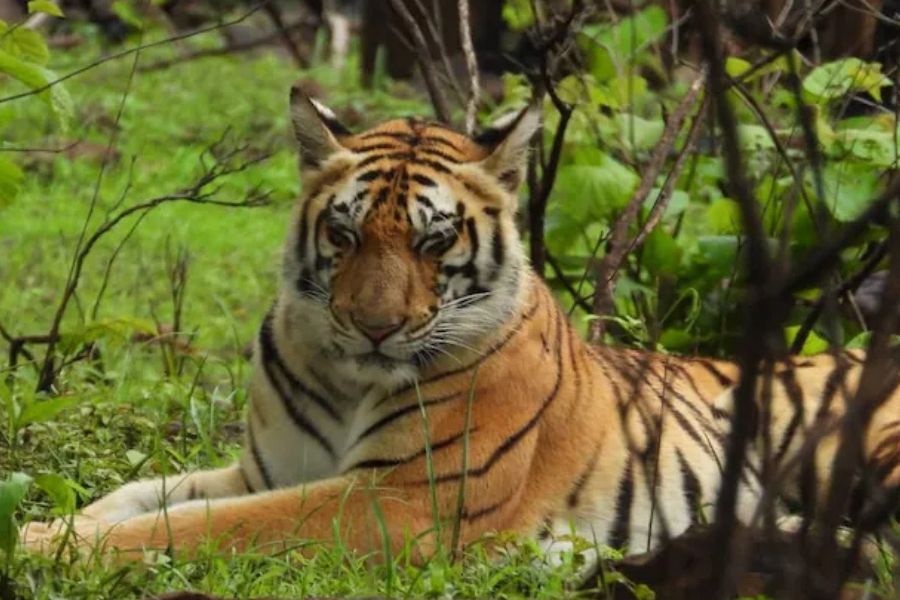
Tigers accounted for the largest share of those deaths. As many as 22 people were killed in tiger attacks during the period. At the same time, at least 45 tigers died in Madhya Pradesh. The numbers highlight a difficult paradox.
The state has achieved major success in tiger conservation. But as wildlife populations recover and expand, interactions between animals and human settlements are becoming increasingly difficult to manage.
Of the 50 human fatalities recorded in wild-animal attacks, 22 were attributed to tigers.
Wild boars were responsible for eight deaths, while elephants accounted for seven. Sloth bears caused four fatalities and one person was killed in a leopard attack. The figures show that the conflict is not limited to one species.
However, tiger attacks remain the most serious concern because of the size, strength and territorial behaviour of the animal. At least 16 of the 50 victims were girls and women, according to the report.
For communities living close to forests, such encounters can occur during routine activities.
Collecting firewood, farming, grazing livestock or travelling through forest-edge areas can bring people into areas frequented by wild animals.
That makes human-wildlife conflict a daily security issue rather than an occasional wildlife event.
The central challenge is the shrinking distance between human settlements and wildlife habitats.
Madhya Pradesh has some of India’s most important tiger reserves and forest landscapes. The recovery of tiger populations is a conservation success. But a growing tiger population also requires sufficient habitat, prey and connected forest corridors.
When natural corridors become fragmented by roads, railways, agriculture, mining or settlements, animals can be forced to move through human-dominated landscapes.
The result can be a rise in encounters. The same problem applies to other species. Wild boars can enter agricultural fields in search of food. Elephants can move through villages and farmland. Leopards and sloth bears can also appear near settlements.
Therefore, the Madhya Pradesh crisis should not be viewed simply as a tiger problem.
It is a wider human-animal conflict challenge. The situation becomes particularly complicated when conservation success and human development occur in the same landscape.
A healthy tiger population requires space. Human communities require land, roads, farms and infrastructure. The challenge is to prevent these two requirements from becoming mutually destructive.
The 45 tiger deaths reported during the same eight-month period are equally concerning.
Tiger mortality can occur for several reasons, including natural causes, territorial conflict, accidents, disease, poaching and conflict with people. Each case therefore needs to be investigated separately.
But the broader figure raises questions about whether wildlife management systems are keeping pace with the changing landscape. India’s tiger conservation model has focused heavily on increasing populations and protecting core habitats.
The next challenge is increasingly about managing landscapes outside protected areas. Tigers do not recognise administrative boundaries.
A tiger moving from a protected reserve into a forest corridor can quickly enter farmland or a village. That makes early detection critical. Technology can play a major role.
Camera traps, GPS-based monitoring, rapid-response teams and real-time alerts can help forest officials identify high-risk areas before an encounter becomes fatal.
Local communities also need to be part of the system. Residents living near forests are often the first people to notice unusual animal movement. Providing them with timely warnings can prevent people from entering high-risk zones.
Compensation mechanisms are equally important. When a person is killed or livestock is lost, delays in compensation can deepen resentment against wildlife conservation programmes. A conservation strategy can succeed only when local communities see tangible benefits from protecting wildlife.
The Madhya Pradesh figures expose a fundamental challenge. Tiger conservation cannot be measured only by the number of animals surviving in the wild.
Human safety must also form part of the conservation equation. The same principle works in reverse. Protecting people cannot mean eliminating wildlife from areas where animals naturally occur.
The objective must be coexistence based on science, planning and rapid response. Wildlife corridors need stronger protection. Forest-edge settlements require better warning systems. High-risk zones need regular monitoring.
Forest officials need trained rapid-response teams. And local residents need clear information about how to respond when a tiger or another dangerous animal is spotted. Land-use planning is also critical.
New roads, railways, mines and settlements should take wildlife corridors into account before construction begins. Otherwise, infrastructure development can unintentionally create new conflict zones. Madhya Pradesh’s current numbers should therefore be treated as a warning rather than merely another set of statistics.
Fifty human deaths in eight months represent a serious public-safety concern.Forty-five tiger deaths represent a serious conservation concern. Both are symptoms of the same underlying problem: an increasingly crowded landscape where humans and wildlife are competing for space and resources.
The answer cannot be found in choosing between people and animals. India’s long-term conservation challenge is to create landscapes where communities remain safe and wildlife populations remain viable.
For Madhya Pradesh, that challenge is particularly urgent.
The state may remain India’s Tiger State. But its next conservation success will not simply be measured by how many tigers it can protect. It will be measured by whether those tigers and the people living around them can survive together.








© Copyright 2026, cloudTV. All Rights Reserved