



Air India Pilot


The investigation into the Air India Phuket-Delhi flight that suddenly lost around 300 feet of altitude has taken a dramatic turn.

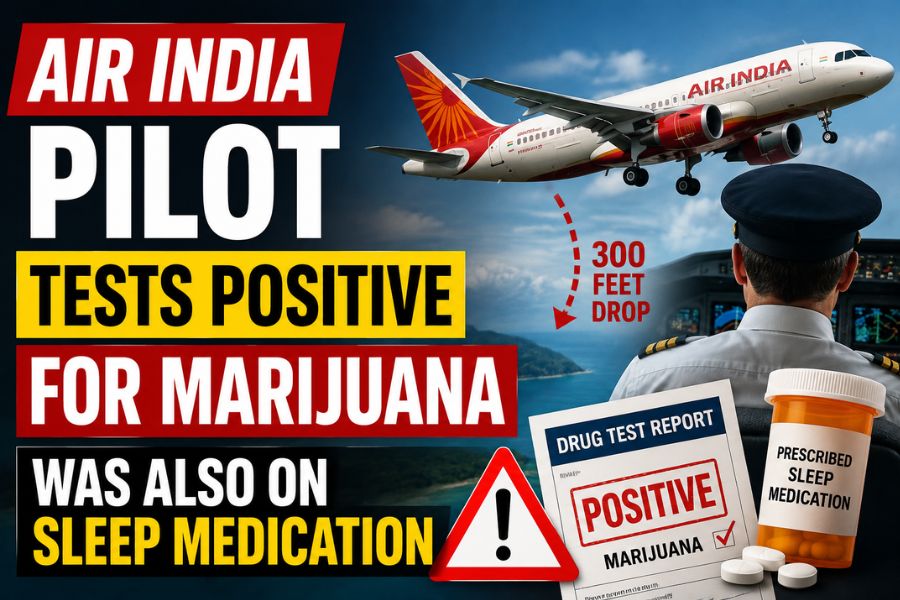
The pilot-in-command of the aircraft reportedly tested positive for marijuana twice in drug testing. An internal Air India flight safety report accessed by National Media House also indicates that the pilot was taking prescribed medication for sleep difficulties.
The incident occurred on August 4 when Air India flight AI-2379, an Airbus A320neo, was flying from Phuket to New Delhi.
The aircraft was carrying 137 passengers and eight crew members. It suddenly lost approximately 300 feet of altitude while flying over Odisha. At least 20 passengers and four crew members were injured in the incident. The aircraft subsequently landed safely in Delhi.
The incident has been classified as a serious aviation safety matter and remains under investigation.
According to the internal flight safety report accessed by a National Media House, the pilot-in-command underwent drug testing after the incident.
The pilot reportedly tested positive for marijuana. A subsequent confirmatory test also returned positive, according to reports.
Both pilots were subjected to mandatory psychoactive substance screening following the incident.
The Directorate General of Civil Aviation has taken the matter seriously, and both pilots have been removed from the roster pending the investigation.
However, a positive marijuana test by itself does not establish that the pilot was intoxicated while operating the aircraft. Determining when the substance was consumed and whether it had any effect on the pilot’s performance at the time of the incident will be part of the investigation.
The distinction is important because marijuana metabolites can remain detectable after the period of intoxication has ended.
The internal safety report also contains the pilot’s statement about his sleep problems.
According to the statement, the pilot had been experiencing difficulty sleeping for some time because of personal circumstances. He said he had been prescribed medication by his family doctor.
During his layover in Phuket, the pilot said he attempted to rest but found it difficult to sleep. He said he subsequently engaged in light physical activity because he believed it could help improve his sleep.
The pilot also raised concerns about the scheduling of his duties.
He said that although his roster was legally within prescribed rest limits, the scheduling pattern had compressed the amount of daytime rest available to him.
For the first flight, he had to report for duty at 12:10 am. That meant he needed to begin preparing before 10 pm.
After completing the flight and reaching the hotel in Phuket, another 1.5 to two hours were reportedly lost to post-flight procedures and transportation.
For the return flight, he said he had to wake up at 3 am Indian Standard Time.
The pilot’s comments are now relevant to the wider investigation into fatigue, medication and fitness for duty.
The internal report also contains another significant detail.
According to the report, the pilot-in-command was not in his seat when the aircraft suddenly lost around 300 feet of altitude. The co-pilot was reportedly in control of the aircraft at that time.
After the altitude loss, the pilot reportedly went into the cabin to check on injured passengers.
Sources cited in the report also claimed that he asked passengers not to record him or the aircraft.
After the aircraft landed in Delhi, the pilot was reportedly unsteady on his feet and needed assistance.
He also allegedly needed physical assistance while submitting his urine sample for testing.
There are also reports about events during the crew’s stay in Phuket. According to the National Media House report, the pilot had taken crew members to a party before the return flight.
The significance of these details will depend on what investigators establish regarding the pilot’s condition, the timing of any substance exposure, medication use and the aircraft’s technical performance.
Both pilots remain off the roster while the investigation continues.
Importantly, investigators have not yet established that the pilot’s alleged marijuana use or medication was the direct cause of the aircraft’s sudden altitude loss.
The Aircraft Accident Investigation Bureau is examining the incident, while aviation authorities are also looking at flight data, crew actions and other possible factors.
The case is now raising wider questions about pilot fitness, fatigue management, medication disclosure and psychoactive substance testing in commercial aviation.
The final investigation report will be crucial in determining exactly what happened aboard AI-2379 and whether any regulatory or disciplinary action should follow.








© Copyright 2026, cloudTV. All Rights Reserved