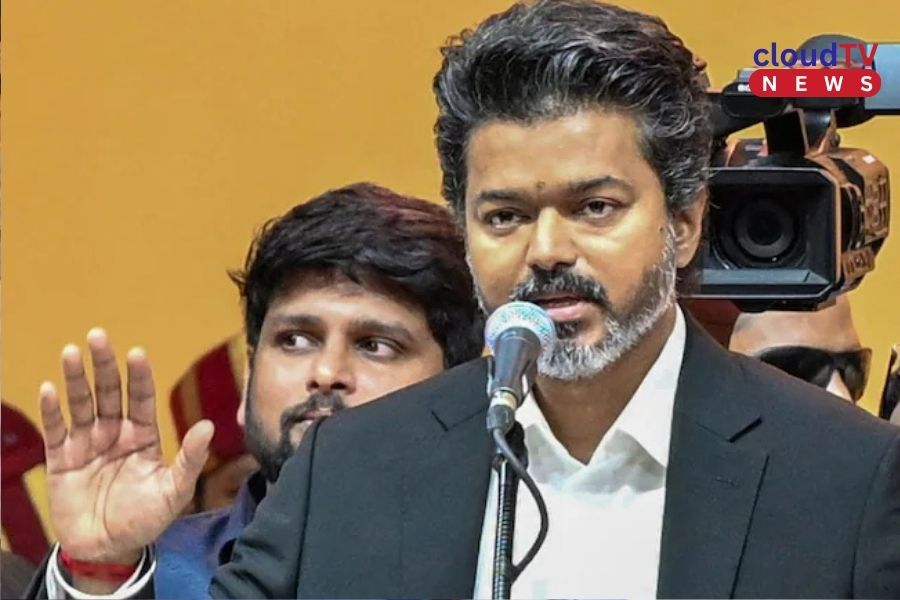
In a statement, Vijay said Tamil Nadu has consistently opposed NEET since its introduction. He argued that the examination largely benefits urban and coaching-centre-dependent students, while rural, government-school and economically weaker students are left at a disadvantage. He maintained that medical admissions should not depend entirely on one centralised examination and that states should be allowed to admit students on the basis of higher secondary examination marks.
Vijay further claimed that since the introduction of NEET, many talented students from Tamil-medium and government schools have suffered. According to him, the exam has strengthened the coaching culture in India, increasing financial and psychological pressure on ordinary families. Questioning the credibility of the system, he said repeated paper leaks have severely damaged public trust in the examination process.
Advertisement

The Chief Minister also pointed out that the NEET-UG 2026 cancellation is not an isolated incident. He recalled that allegations of paper leaks had surfaced in 2024 as well, following which the investigation was handed over to the Central Bureau of Investigation. Despite expert committees and repeated assurances, another controversy has emerged within two years, which he described as evidence of a much deeper systemic problem rather than a simple administrative failure.
NEET-UG 2026 was conducted on May 3 across the country. However, after allegations of question paper leaks and irregularities surfaced in multiple states, the National Testing Agency decided to cancel the examination. More than 22 lakh students across India have been affected by the decision, including around 1.4 lakh candidates from Tamil Nadu alone. NTA has announced that a re-examination will be conducted, although fresh dates have not yet been released.
Tamil Nadu has witnessed strong opposition to NEET for several years. Political parties and sections of the education community in the state have repeatedly argued that a single national entrance examination weakens state education systems and increases social inequality. Opposition to NEET intensified further after the 2017 suicide of Tamil Nadu student Anitha, whose death became a symbol of the anti-NEET movement in the state.
Vijay’s latest remarks have added fresh political pressure on the Central government amid growing anger over the NEET controversy. Education experts believe the issue could emerge as a major national political debate in the coming months, while public confidence in India’s centralised examination system continues to face serious questions.