


Raghav Chadha


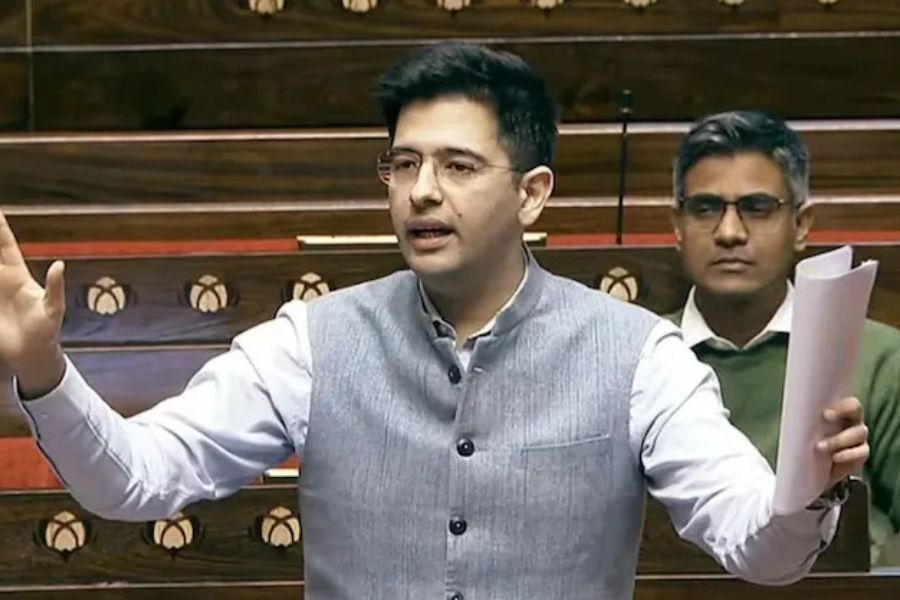
Rajya Sabha MP Raghav Chadha has broken his silence on the NEET paper leak controversy, explaining that his responsibilities changed after moving from the Opposition to the treasury benches. Addressing Parliament during the debate on the anti-paper leak legislation, Chadha said he was focused on delivering solutions rather than making headlines.

His remarks came after weeks of criticism from political opponents and sections of social media questioning why he had remained largely silent during nationwide protests over alleged irregularities in the NEET examination.
Speaking in the Rajya Sabha, Chadha said that when he was in the Opposition, his primary duty was to question the government. However, after joining the ruling side, his role shifted toward helping formulate solutions to systemic problems.
He stated that he was never interested in “marking attendance” before television cameras or seeking media attention. Instead, he wanted to speak when concrete reforms were being introduced to improve the examination system.
According to Chadha, meaningful governance is measured by outcomes rather than public statements.
The MP welcomed the government’s anti-paper leak legislation, describing it as an important step towards protecting students and restoring confidence in public examinations.
The legislation proposes stricter penalties for examination fraud and stronger enforcement mechanisms against organised paper leak networks. The broader reform agenda has also received attention from the Supreme Court, which has called for long-term structural improvements in the examination system.
Chadha argued that students deserve a transparent and credible examination process, adding that political debates should ultimately lead to institutional reforms.
While Chadha defended his silence as a deliberate choice, his remarks have triggered fresh political reactions. Critics argue that elected representatives should have spoken out more forcefully during the height of the NEET controversy.
Supporters, however, say his approach reflects a shift from political confrontation to governance, where implementing reforms takes precedence over public rhetoric.
The NEET paper leak issue has dominated national politics in recent months, leading to student protests, parliamentary debates and a series of government initiatives aimed at strengthening the integrity of competitive examinations. Chadha’s statement has now added another dimension to the ongoing discussion over political accountability and education reforms.







© Copyright 2026, cloudTV. All Rights Reserved