



Ethanol Blending


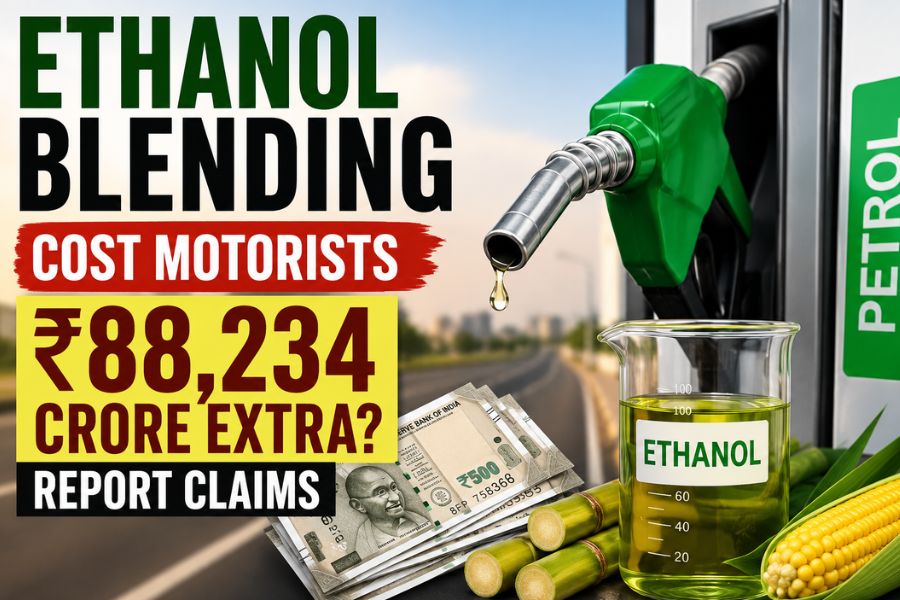
An investigative report by The Reporters’ Collective has claimed that Indian motorists spent an additional ₹88,234 crore between April 2023 and March 2026 because ethanol-blended petrol delivers lower fuel efficiency than conventional petrol. The estimate is based on the publication’s analysis of government fuel consumption and vehicle growth data and has not been independently validated by the Government of India.

The report has reignited debate over India’s ambitious ethanol blending programme, which aims to reduce dependence on imported crude oil while supporting domestic agriculture and lowering carbon emissions.
According to the investigation, ethanol contains less energy per litre than petrol, meaning vehicles may consume more blended fuel to travel the same distance.
Using official fuel consumption data, the publication estimated that the lower mileage translated into an additional fuel cost of around ₹88,234 crore for consumers over the three-year period. It argues that while the government benefits from reduced crude oil imports, motorists ultimately bear part of the financial burden through increased fuel consumption.
The report also suggests that the recurring cost could increase if ethanol blending levels rise further in the future.
The Union Government has strongly defended the Ethanol Blended Petrol (EBP) Programme, arguing that it delivers benefits extending beyond pump prices.
According to the Ministry of Petroleum and Natural Gas, the programme has saved more than ₹1.90 lakh crore in foreign exchange since 2014-15, reduced crude oil imports, lowered greenhouse gas emissions and generated substantial additional income for farmers. The government has also rejected claims that ethanol blending significantly damages engines or causes major mileage losses.
Officials maintain that India’s energy security and environmental goals justify continued expansion of ethanol blending.
The contrasting claims have fuelled a broader debate among economists and energy experts.
Supporters argue that evaluating ethanol blending solely on immediate consumer fuel costs ignores long-term strategic benefits, including reduced exposure to volatile global crude oil markets, improved rural incomes and lower emissions.
Critics, however, say that if consumers are paying higher effective fuel costs due to lower mileage, the government should publicly quantify those costs alongside the programme’s reported benefits.
As India continues to expand biofuel use, the discussion is increasingly shifting from whether ethanol blending should continue to how its economic and environmental impacts should be measured transparently.








© Copyright 2026, cloudTV. All Rights Reserved