



• 3 September 2026
  • Thursday
ad
ad
Ashok Lahiri Large Industries

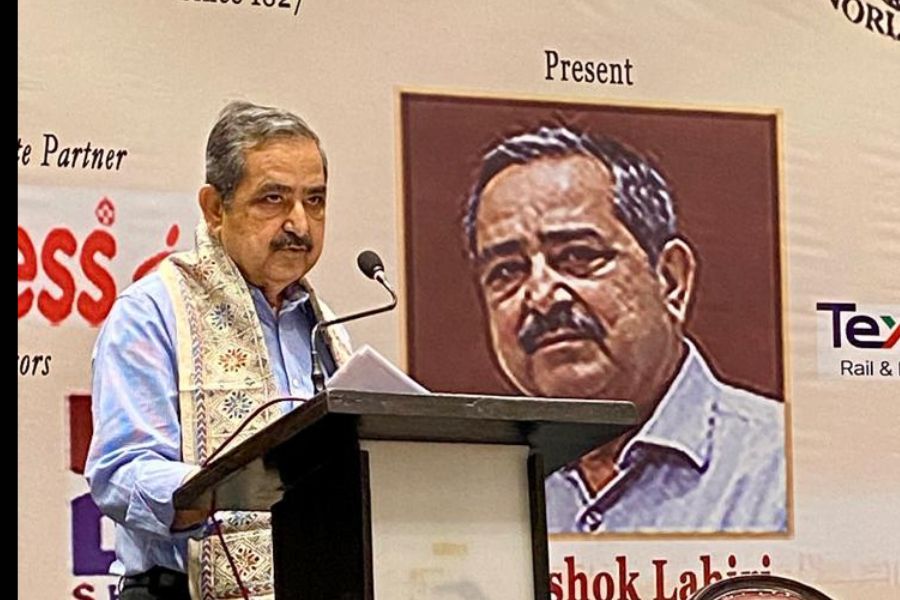
Large Land Parcels Essential for Large Industries and Development: Ashok Lahiri

Large-scale industrialisation is essential for West Bengal's long-term economic growth, says economist Dr Ashok Lahiri. He argues that large industries require adequate land, while transparent land acquisition, fair compensation, and proper rehabilitation are key to attracting investment and creating sustainable employment.

Large Land Parcels Essential for Large Industries and Development: Ashok Lahiri

Ashok Lahiri Large Industries

Published by: cloud_admin
  • Posted:July 28, 2026 7:15 am
  • Update:July 28, 2026 7:15 am
  • Facebook
  • Telegram
  • X
  • Whatsapp

Cloud TV Desk:

West Bengal must embrace large-scale industrialisation if it wants to achieve sustainable economic growth and generate long-term employment, according to noted economist Dr Ashok Lahiri. Speaking on the state’s development prospects, Lahiri said that large industries require large land parcels and that policymakers must recognise this economic reality while balancing the interests of landowners and investors.

Large Land Parcels Are Essential for Mega Industries

Dr Lahiri argued that large manufacturing projects cannot be established without adequate land. According to him, industrialisation should not be viewed merely as the construction of factories but as the creation of an entire economic ecosystem.

He said that major industrial projects attract ancillary industries, logistics companies, transport networks, housing, and service sectors. As a result, one large investment can transform the economy of an entire region and create thousands of direct and indirect jobs.

Lahiri stressed that if West Bengal wants to compete with other investment-friendly states, it must be prepared to facilitate large industrial projects with appropriate infrastructure and land availability.

Industrialisation Is the Key to Long-Term Employment and Economic Growth

The economist said that while agriculture and small businesses remain important, they alone cannot meet the employment demands of a growing population. Every year, thousands of young people enter the job market, making large-scale investment essential for creating sustainable employment opportunities.

According to Lahiri, industrial growth also increases state revenue, boosts exports, encourages innovation, and strengthens the manufacturing sector. Large industries, he added, create opportunities for small and medium enterprises by expanding supply chains and supporting local businesses.

He emphasised that agriculture and industry should not be seen as competing sectors. Instead, both should grow together to ensure balanced and inclusive economic development.

Transparent Land Acquisition, Fair Compensation and Rehabilitation Are Crucial

Acknowledging the sensitivities surrounding land acquisition, Dr Lahiri said that transparency must remain at the centre of every industrial policy. He emphasised that landowners should receive fair compensation based on market value along with proper rehabilitation and livelihood support.

He noted that public trust is essential for successful industrialisation. Open dialogue between the government, investors, and local communities can help minimise conflicts and ensure that development benefits all stakeholders.

Lahiri also highlighted the importance of environmentally responsible industrial growth. He said that modern technology allows industries to expand while maintaining environmental safeguards, making it possible to pursue development without compromising sustainability.

Industry experts believe that with investor-friendly policies, faster approvals, improved infrastructure, and transparent governance, West Bengal can once again emerge as one of India’s leading industrial destinations. Dr Ashok Lahiri’s remarks have reignited the debate on how the state can strike the right balance between economic growth, employment generation, and responsible land use.

More Stories