


Mohammed Afroz 9/11


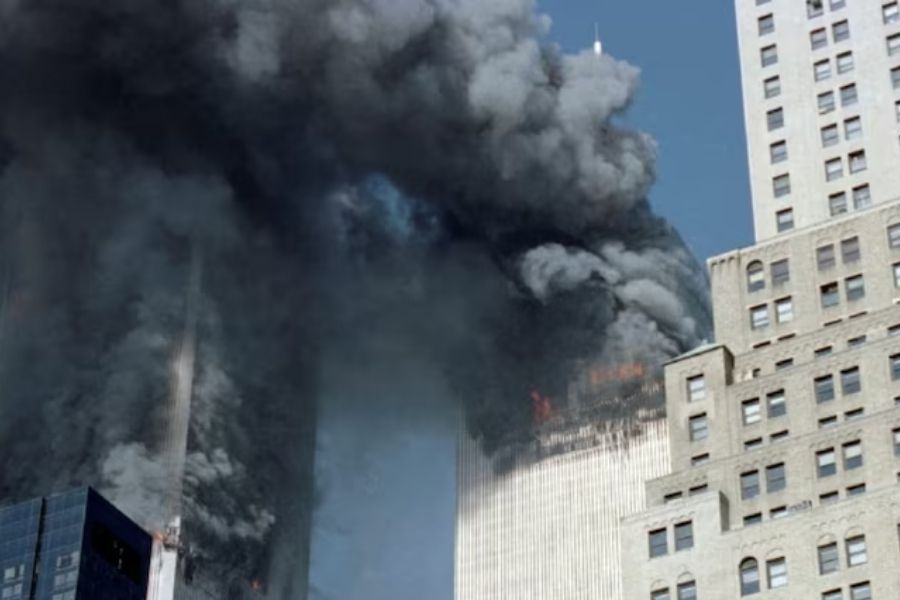
The September 11, 2001 attacks in the United States changed the course of global security and foreign policy. Nineteen Al-Qaeda operatives hijacked four passenger aircraft. Two planes crashed into New York’s World Trade Center, another hit the Pentagon, while a fourth crashed in Pennsylvania after passengers fought back.

But a month after the attacks, a young man arrested by Mumbai Police made claims that caused a major stir in India. His name was Mohammed Afroz. Police said Afroz claimed that attacks had also been planned in Britain and Australia on September 11 and that he had been part of the wider conspiracy. Crucially, however, subsequent investigations did not find evidence supporting his claims.
Afroz lived in Cheeta Camp, an economically disadvantaged settlement in Mumbai. His father worked as a tailor there.
In October 2001, Mumbai Police received intelligence that Afroz had travelled abroad for pilot training. Investigators found the information suspicious because of the high cost of overseas flight training and Afroz’s modest family background.
Police suspected that an individual or organisation could have financed his training and began looking for him. They eventually traced Afroz to Hotel Abbott in Vashi, Navi Mumbai, where he was arrested.
According to Mumbai Police, Afroz claimed during interrogation that he had been involved in the Al-Qaeda conspiracy linked to the September 11 attacks.
Police said he claimed to have been part of a team assigned to hijack an aircraft and crash it into the British Parliament.
According to the alleged plan, Afroz was supposed to hijack a flight travelling from London’s Heathrow Airport to Manchester on September 11, 2001. But after news of the attacks in the United States spread, security was tightened at airports around the world, preventing the alleged operation from going ahead, according to the account attributed to Afroz.
Afroz also allegedly told investigators that he had received encouragement to become involved in terrorism while in Australia.
He claimed to have received pilot training in three countries—Australia, Britain and the United States.
According to his alleged account, another team had also been prepared to attack Melbourne’s Rialto Towers in Australia.
Because of the seriousness of these claims, Mumbai Police launched an international investigation. Teams were sent to the United States, Britain and Australia, while then Mumbai Police Commissioner M N Singh travelled to Britain as part of the probe.
The allegations were significant enough to prompt an investigation across three countries. However, the investigation failed to uncover evidence supporting Afroz’s claims.
Mumbai Police also failed to gather enough evidence to substantiate the allegations against him in court. The prosecution later approved the removal of the Prevention of Terrorism Act, or POTA, charges against him, and Afroz was released.
After his release, Afroz maintained that he had been falsely implicated by the police and that the allegations against him were fabricated.
He later contested the Anushakti Nagar Assembly election, although he was unsuccessful.
As the world marks the 25th anniversary of the September 11 attacks, the story of Mohammed Afroz has resurfaced as one of the lesser-known episodes investigated in India in the aftermath of the attacks.
The crucial caveat, however, remains: Afroz made extraordinary claims about planned attacks in Britain and Australia, but investigations in the three countries did not produce evidence supporting those allegations. His claims therefore remain allegations rather than established facts, particularly given the subsequent failure to substantiate them in court and his own denial of the accusations.








© Copyright 2026, cloudTV. All Rights Reserved