


Xi Jinping India visit 2026


Chinese President Xi Jinping is returning to India after seven years (Xi Jinping India visit 2026) for the 18th BRICS Summit in New Delhi on September 12-13. Xi is also expected to hold talks with Prime Minister Narendra Modi on the sidelines of the summit, as both countries seek to build on the gradual thaw in relations following years of tensions after the 2020 Galwan Valley clash.

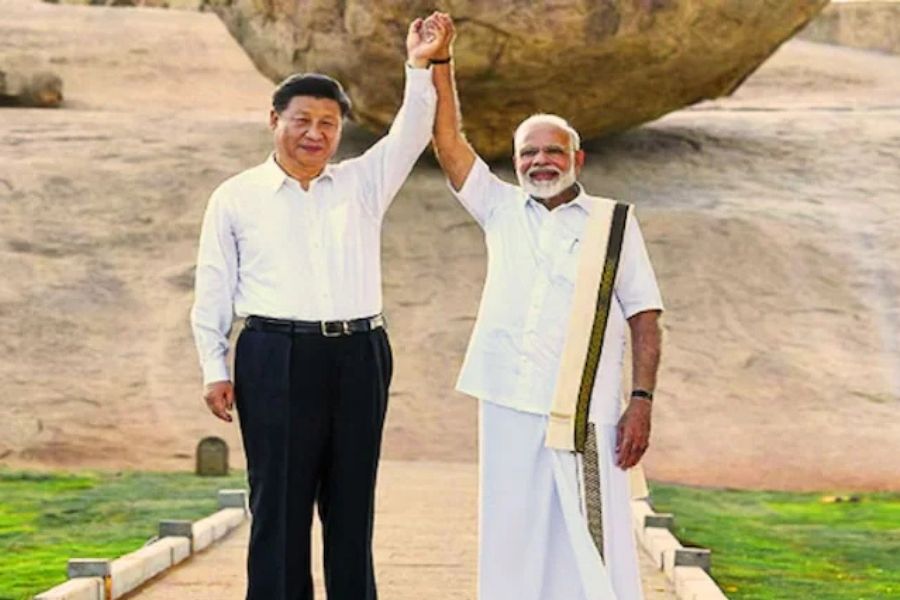
Xi’s last visit to India was in 2019, when he met Modi for an informal summit in Mamallapuram. Relations subsequently deteriorated sharply after the 2020 military confrontation in eastern Ladakh.
Since the October 2024 meeting between Modi and Xi in Kazan, however, New Delhi and Beijing have taken several steps to stabilise relations. The BRICS summit now provides another opportunity to sustain that momentum.
The border issue is expected to remain central to any Modi-Xi conversation. India has consistently maintained that peace and tranquillity along the frontier are essential for broader improvement in bilateral relations.
At Kazan, the two leaders backed continued engagement through their Special Representatives on the boundary question. More recently, National Security Adviser Ajit Doval and Chinese Foreign Minister Wang Yi discussed border management and efforts towards a fair and mutually acceptable settlement.
Economic ties will also be closely watched. China is India’s largest trading partner, but the relationship remains heavily tilted in Beijing’s favour.
Bilateral trade reached a record $151.1 billion in the financial year ending March 2026, while India’s trade deficit with China climbed to a record $112.16 billion. New Delhi is therefore expected to push for greater market access, more reliable supply chains and measures to address the growing trade imbalance.
There are already signs of improving engagement. Direct flights between India and China resumed last year, while New Delhi eased visa procedures for Chinese business professionals.
Border trade has also resumed this year after a six-year pause. Trade through the Lipulekh and Nathula routes has restarted, although the reopening remains part of a cautious and incremental normalisation process.
India’s BRICS presidency comes at a complicated geopolitical moment. The expanded grouping has greater economic and diplomatic weight, but its members also have sharply differing positions on global conflicts and relations with the West. India is seeking to work with China and Russia within BRICS while maintaining its broader strategic partnerships with the United States and other Western countries.
Xi’s return to India is therefore about more than the BRICS agenda. The outcome of discussions on the border, trade, investment and supply chains could determine whether the current India-China thaw develops into a more durable normalisation of relations.







© Copyright 2026, cloudTV. All Rights Reserved