



Trump TV White House


The confrontation between US President Donald Trump’s administration and news organisations has entered a new phase following restrictions on CNN, MS NOW and Politico journalists at the White House.

Amid the dispute, the White House launched a 24-hour streaming service called “Trump TV”. The platform carries administration announcements, presidential remarks, official events and selected archival footage. The White House says the service is intended to provide viewers with direct access to administration video.
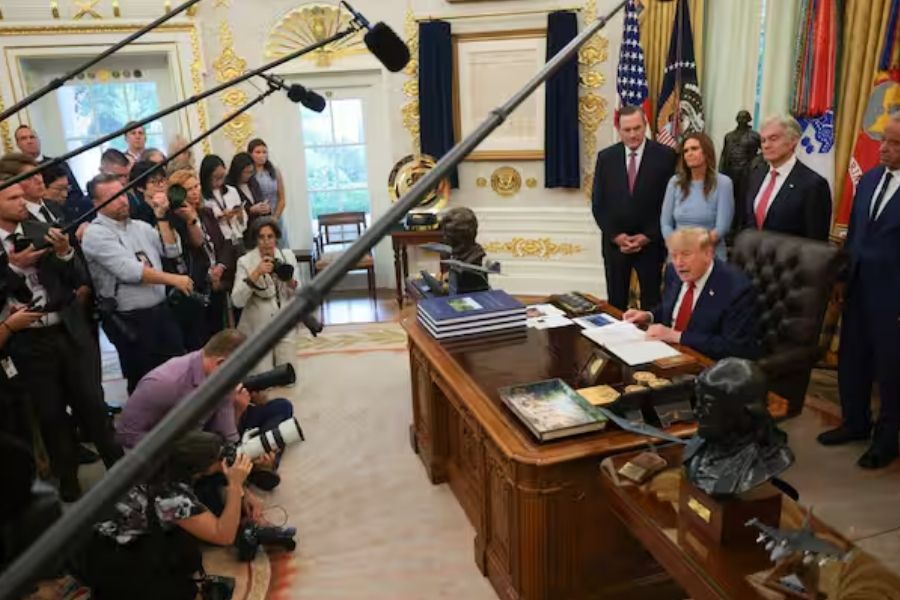
The White House television pool is a shared media arrangement designed to provide video coverage of the president’s activities.
It would be impractical for every television organisation to send its own crew to every presidential event. Instead, ABC, CBS, CNN, Fox News and NBC take turns covering designated events and share the footage with other media organisations.
The system also helps ensure that sudden presidential remarks and important official events can be recorded and distributed quickly.
The dispute escalated after CNN was barred from the White House. CNN had been scheduled to perform a pool assignment, but the remaining networks did not replace it with another crew.
The Trump administration barred journalists from CNN, MS NOW and Politico from the White House after Trump criticised their reporting and described it as “fake news”.
On September 19, reporters from the three organisations were denied access to the White House grounds. The organisations said their press credentials were also deactivated or confiscated.
CNN, MS NOW and Politico subsequently filed a federal lawsuit against the administration. They argue that the restrictions violate First Amendment protections for the press and due-process guarantees.
The White House disputes that interpretation. Vice President JD Vance has argued that the affected organisations remain free to report from outside the White House and communicate with administration officials.
The legal dispute will now determine the scope of the administration’s authority over press access and credentials.
The White House launched “Trump TV” during the dispute over press access. The service provides a direct stream of presidential and administration video.
It includes Trump’s speeches, official announcements, presidential events and selected highlights from previous appearances. The platform therefore allows the White House to distribute its own footage even when independent television pool coverage is unavailable.
The difference became visible during the opening of a new White House helipad. The usual television pool did not provide coverage. The White House supplied its own livestream, but without the professional pool audio setup, some of Trump’s remarks were difficult to hear over the helicopter noise.
That has highlighted the distinction between government-produced video and independent news coverage. Trump TV can provide direct access to the administration’s statements and events, but its content is produced or selected by the administration itself.
The television pool, by contrast, is designed to create an independent audiovisual record of presidential activity and share it across competing news organisations.
The dispute is now before the courts. The eventual legal decisions could clarify how much control a White House can exercise over press access and how government-produced video should coexist with independent coverage.









© Copyright 2026, cloudTV. All Rights Reserved