


1980s AI photo trend


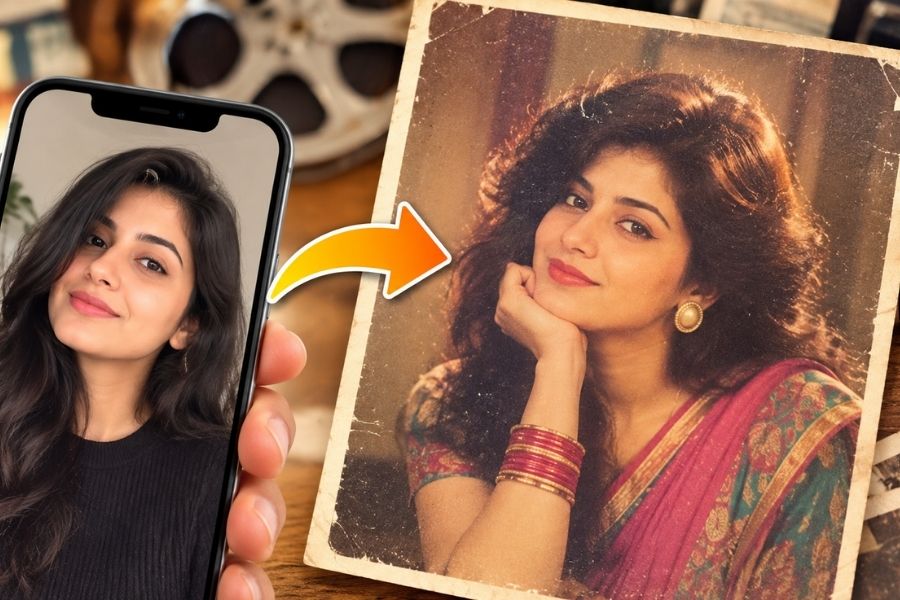
What would you have looked like if your favourite photograph had been taken in the 1980s instead of 2026? That is the question behind Instagram’s latest AI-powered photo trend, which is encouraging users to turn modern photographs into realistic retro portraits with the help of ChatGPT.

Unlike a conventional vintage filter that simply changes colours or adds grain, the new trend uses AI to recreate an entire visual style. Users can alter clothing, hairstyles, accessories, backgrounds, lighting and photographic texture while keeping the person’s recognisable facial features intact.
The process is relatively straightforward. Users begin by selecting a clear portrait or selfie where their face is easily visible. They then upload the photograph to ChatGPT and describe the 1980s aesthetic they want.
A prompt can specify the clothing, hairstyle, jewellery, background, lighting and type of photography. Users can ask the AI to preserve their facial identity while making the rest of the image look as though it was genuinely photographed four decades ago.
If the first result is not convincing enough, users can refine the image through additional instructions, changing the hairstyle, clothes, setting or lighting.
One of the reasons the trend has gained attention is the number of styles users can explore.
A photograph can be transformed into an old Bollywood studio portrait, an Indian family-album photograph, a wedding picture, a magazine shoot or even a television-era portrait.
Indian versions of the trend often incorporate distinctive 1980s fashion. Women can be styled in colourful sarees, large hairstyles and statement jewellery, while men can be given classic shirts, high-waisted trousers, neatly combed hair and moustaches.
The aim is not simply to make the photograph appear old. Instead, the AI is asked to make the entire image feel authentic to the period.
Users can make the recreation even more specific by choosing a particular cultural setting.
For example, a prompt can ask for an Indian television portrait inspired by the Doordarshan era, complete with period clothing, studio lighting and analogue film characteristics.
Another option is a late-1980s Indian street photograph. In that case, users can ask the AI to recreate period-appropriate vehicles, signs, buildings, colours and surroundings alongside the person’s clothing and appearance.
This makes the trend more than a portrait filter. It becomes an attempt to reconstruct an entire visual environment from another era.
Nostalgia is at the heart of the trend. Users are effectively asking AI to answer a personal question: What might I have looked like 40 years ago?
The trend is also highly shareable. Users have been posting their AI-generated portraits on Instagram Stories, sharing the prompts used to create them and encouraging friends and followers to try the same idea.
The trend also highlights how generative AI is changing photo editing. Instead of simply applying a preset filter, users can describe an entire historical aesthetic and ask AI to reconstruct it.
For people interested in retro fashion, Bollywood nostalgia, family photographs or simply experimenting with AI, the 1980s trend offers a highly personalised way to revisit a decade they may remember—or never experienced at all.








© Copyright 2026, cloudTV. All Rights Reserved