



Animal-Derived Ingredients Packaging Rules


Identifying whether a packaged food product is vegetarian or non-vegetarian is important for many consumers. The question can become more complicated when a product does not visibly contain meat or fish but includes ingredients derived from animals.

A report has highlighted discussions around making animal-derived ingredients easier to identify through food packaging. The broader objective is to give consumers clearer information before they purchase a product.
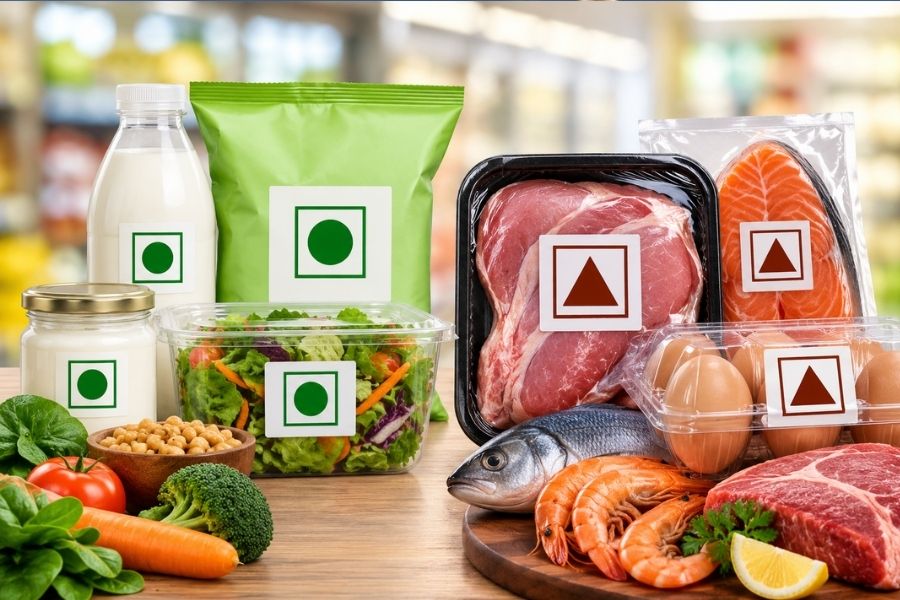
India already has an FSSAI labelling framework for vegetarian and non-vegetarian foods. Vegetarian products use a green symbol, while non-vegetarian products use a brown symbol.
Some packaged foods contain ingredients whose source may not be immediately obvious to consumers. This can be particularly relevant in the case of certain food additives, flavouring agents and processing aids.
Under the existing FSSAI labelling framework, packaged food must carry information including the ingredient list, nutritional information and the applicable vegetarian or non-vegetarian declaration. The information is also required to be clear, prominent and readily legible.
The focus, therefore, is not simply on displaying a “Veg” or “Non-Veg” label. Clearer identification of animal-derived ingredients can help consumers understand the nature and source of what they are buying.
Under FSSAI’s existing rules, vegetarian food carries a green-coloured filled circle inside a green-outlined square. Non-vegetarian food carries a brown-coloured filled triangle inside a brown-outlined square.
FSSAI’s labelling framework covers food products containing ingredients derived from eggs, meat, fish and seafood under the non-vegetarian declaration.
Where egg is the only non-vegetarian ingredient, the regulations also provide for an additional declaration to indicate this.
The symbol is therefore an important first-level indicator for consumers, although checking the complete ingredient list remains useful.
More prominent information about animal-derived ingredients could make food choices easier for consumers who follow vegetarian diets or avoid specific ingredients for religious, ethical or personal reasons.
The issue is also relevant to online food purchases. Under FSSAI’s current labelling requirements, mandatory label information for pre-packaged foods sold through e-commerce or direct-selling channels must be made available to consumers before the sale.
FSSAI has also amended its rules concerning the vegan logo in 2026. The authority’s official records show that the Final Food Safety and Standards (Vegan Foods) Amendment Regulations, 2026, relating to the specification of the vegan logo were published in June 2026.
The developments indicate continued regulatory attention on making food labelling clearer for consumers.
However, any new packaging requirement should be distinguished from the existing labelling rules. The exact implementation date and scope of a new requirement would depend on the relevant government notification. The existing FSSAI framework already provides for vegetarian and non-vegetarian symbols on packaged foods.









© Copyright 2026, cloudTV. All Rights Reserved