



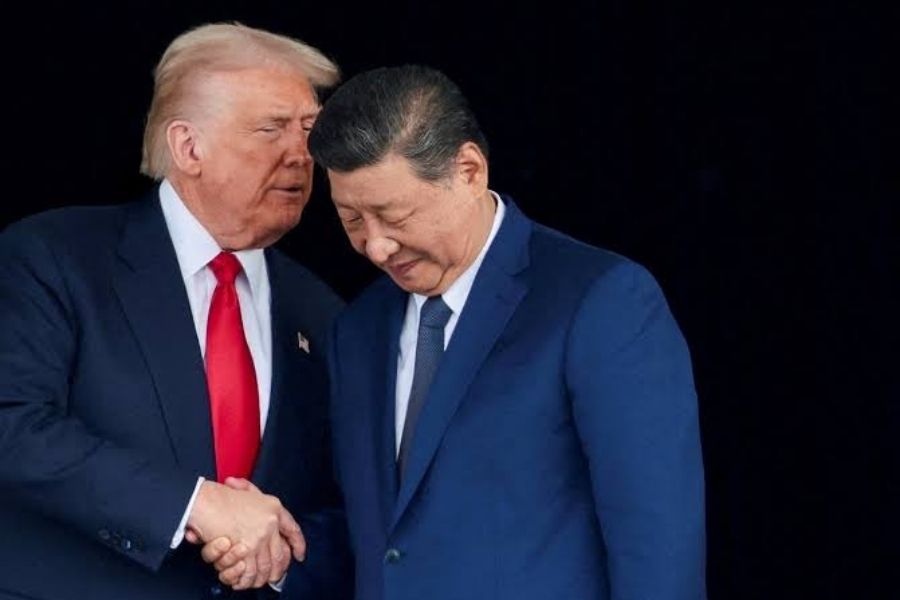
Trump-Xi Meeting


US President Donald Trump and Chinese President Xi Jinping are expected to meet in Washington on September 24, with trade, rare earths, technology and Iran among the issues shaping the wider US-China dialogue.

The meeting also matters for India. If Washington secures some of what it wants directly from Beijing, India’s immediate value to the United States could change in specific areas. If the talks produce little or fail, India’s strategic importance could increase in some domains.
Trade remains one of the main areas of negotiation between Washington and Beijing. The US wants better access for American goods in China and greater balance in bilateral trade. Beijing, meanwhile, is seeking tariff relief and greater certainty for Chinese exporters.
Rare earths and other critical minerals have become another important issue. China plays a dominant role in processing several of these minerals and has previously used export controls as an economic tool.
Washington therefore wants more reliable access to Chinese supplies while continuing to develop alternative supply chains outside China.
This is where India becomes relevant. New Delhi has been developing its critical-mineral capabilities and seeking a larger role in global supply-chain diversification.
If China provides Washington with more reliable access to critical minerals, however, the immediate pressure to develop alternative suppliers could decline. Such a shift could alter the economic value Washington places on some Indian capabilities.
Technology remains a major source of competition between the US and China. Advanced semiconductors and artificial intelligence are among the areas where the two countries continue to have substantial disagreements.
At the same time, Washington and Beijing are exploring ways to manage some of the risks created by their technological rivalry. AI has consequently become part of the wider dialogue, even though the underlying competition remains significant.
Iran adds another dimension to the negotiations. The Trump administration has been using financial sanctions and other measures to pressure Tehran, while China remains an important economic partner of Iran.
If Washington obtains greater Chinese cooperation on Iran, Beijing could become useful to the US on an issue where India also has significant interests.
India’s interests in Iran include energy, connectivity and the Chabahar port. Security around the Strait of Hormuz also has implications for India’s energy supplies and wider economy. Any US-China understanding involving Iran could therefore have consequences for New Delhi.
If Trump secures substantial concessions from Beijing, India’s immediate strategic value could change in some areas. That would not eliminate India’s broader importance to Washington.
India’s geography, military capabilities, market, economic potential and role in the Indo-Pacific remain significant. But the value of a particular Indian capability can depend partly on whether Washington can obtain a similar outcome from another country.
If the Trump-Xi talks produce only a limited understanding, the existing pattern of US-China competition combined with selective cooperation could continue. India could continue to find opportunities in technology, manufacturing, defence and supply-chain diversification.
If the talks fail, China could remain an even more immediate strategic challenge for Washington, potentially increasing India’s value as a partner. However, that would not necessarily mean that the Trump administration would automatically adopt a more accommodating approach towards India.
Trump could instead seek additional concessions from New Delhi. The US-India relationship already combines strategic cooperation with disagreements over trade, market access, immigration and India’s ties with Russia.
For India, therefore, the key question is not simply whether Trump and Xi reach an agreement. It is what the outcome reveals about what Washington will need from India next.








© Copyright 2026, cloudTV. All Rights Reserved