



habits to lower cancer risk


Lifestyle plays an important role in cancer prevention, although no single habit can guarantee protection against cancer.

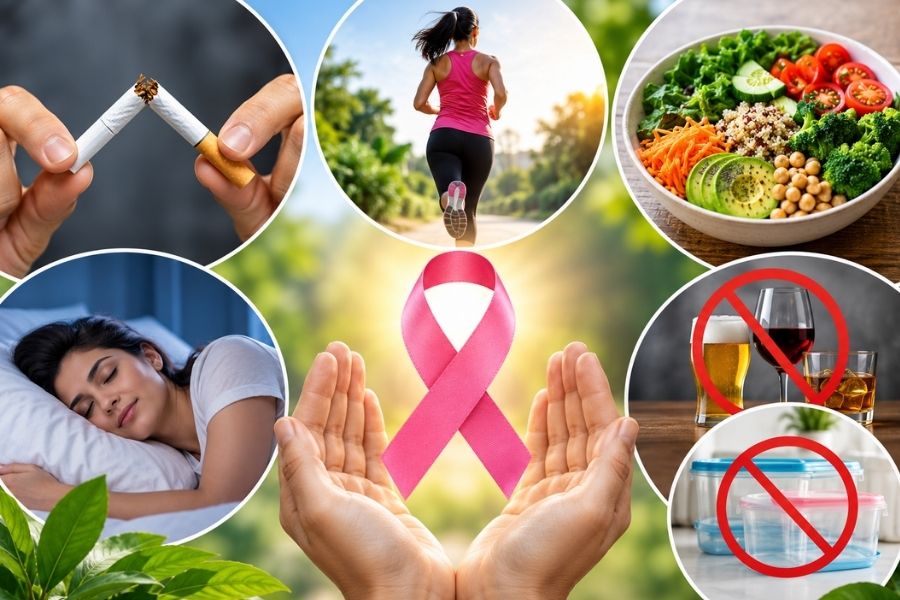
A recent report highlights five everyday habits that people may consider changing: smoking, sleep patterns, meal timing, plastic use and alcohol consumption.
However, the strength of scientific evidence is not the same for all five areas. Major cancer-prevention organisations place particularly strong emphasis on avoiding tobacco, limiting alcohol, maintaining a healthy weight, staying physically active and following a healthy diet.
Avoiding tobacco remains one of the most important steps in reducing cancer risk.
Cigarette smoke contains thousands of chemicals, including substances known to cause cancer. Exposure to second-hand smoke can also harm health.
The report discusses reducing cigarette consumption and avoiding passive smoking. However, from a cancer-prevention perspective, quitting tobacco completely is preferable to simply reducing the number of cigarettes smoked.
A 2026 WHO-IARC analysis identified tobacco as the leading preventable cause of cancer globally. The analysis estimated that tobacco was responsible for around 15% of all new cancer cases worldwide in 2022.
This makes tobacco cessation one of the clearest lifestyle measures for reducing cancer risk.
The report also discusses regular sleep schedules and keeping the bedroom dark at night. It refers to the body’s biological clock and melatonin production.
Getting adequate and regular sleep is important for overall health. However, there is not sufficient evidence to say that going to bed specifically before 11 pm directly prevents cancer.
The report also mentions keeping the stomach empty for extended periods through time-restricted eating.
While research into intermittent fasting and time-restricted eating is continuing, there is not enough evidence to claim that fasting for a specific number of hours prevents cancer.
For cancer prevention, established recommendations focus more strongly on maintaining a healthy weight, eating a balanced diet and engaging in regular physical activity.
Therefore, meal timing can be considered part of an individual’s broader eating pattern, but it should not be presented as a guaranteed cancer-prevention method.
The report advises people to avoid putting very hot food into plastic containers and suggests using alternatives such as steel.
Using food-safe containers and following manufacturers’ instructions is a sensible precaution, particularly when heating or storing hot food.
However, it would be misleading to claim that reducing household plastic use alone definitely prevents specific cancers. Evidence surrounding individual plastic-related chemicals and cancer risk is complex and continues to develop.
The evidence concerning alcohol is considerably stronger.
WHO identifies alcohol consumption as an important preventable cancer risk factor. Alcohol is linked to several cancers, including cancers of the breast, liver, colorectum and oesophagus.
The American Cancer Society states that it is best not to drink alcohol for cancer prevention. People who choose to drink are advised to limit their intake.
Beyond these five habits, cancer-prevention guidance also emphasises maintaining a healthy weight, regular physical activity and a diet rich in vegetables, fruits, whole grains and beans. Limiting highly processed foods, sugary drinks and processed meat is also recommended.
Regular screening can also play an important role in detecting certain cancers early. The appropriate screening schedule depends on age, sex, family history and individual risk factors.
Ultimately, lifestyle changes can lower the risk of several cancers, but they cannot eliminate the possibility of developing the disease. Cancer prevention works best as a combination of evidence-based habits rather than reliance on a single rule or routine.








© Copyright 2026, cloudTV. All Rights Reserved