



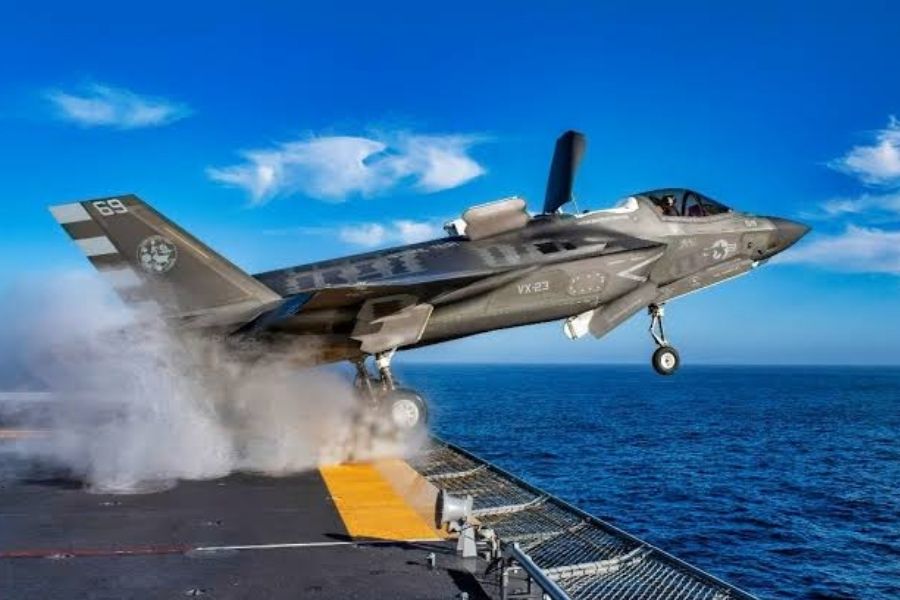
F-35A combat loss


The scale of US military losses in the ongoing conflict with Iran has come into focus after a new Congressional Budget Office assessment. The CBO has estimated that US combat operations against Iran cost approximately $38 billion through August 1, 2026.

The assessment also includes a table of US battle losses. The list includes an F-35A Lightning II, 24 MQ-9 Reaper unmanned aircraft, two KC-135 Stratotankers and several other aircraft and military assets.
One of the most notable entries is an F-35A Lightning II. The fifth-generation stealth fighter has been a major component of the US Air Force’s combat capabilities. Its inclusion in the CBO battle-loss table has drawn attention from open-source analysts.
OSINTDefender described the entry as appearing to confirm the first combat loss of an F-35. However, publicly available US information does not provide a complete account of how the aircraft was lost.
An earlier Congressional Research Service report had also reported damage to one F-35A during combat operations over Iran. It said the aircraft was reportedly damaged by Iranian ground fire.
The distinction between a damaged aircraft and a confirmed combat destruction remains important.
The CBO table also lists 24 MQ-9 Reaper unmanned aircraft. The list includes four F-15E Strike Eagle fighters, one A-10 Thunderbolt II, one E-3 Sentry aircraft, two MC-130J aircraft and one HH-60W helicopter.
One MQ-4C Triton is also listed. The losses extend beyond aircraft. A THAAD AN/TPY-2 radar is included in the battle-loss table. KC-135 Stratotankers, which provide aerial refuelling support, are also among the assets listed.
The Congressional Research Service had previously documented a broader set of reported aircraft losses and damage during Operation Epic Fury. It noted that the number could remain subject to revision because of classification, continuing operations and questions over attribution.
The financial cost of the conflict has also become substantial. According to the CBO assessment, combat operations cost approximately $38 billion through August 1. The estimate includes the cost of munitions, additional flying hours, jet fuel and equipment lost in battle.
Equipment lost in battle accounted for about $1.9 billion of the estimated cost. Increased flying hours accounted for about $10.4 billion, while fuel costs were estimated at approximately $2.7 billion.
The CBO has warned that costs could continue increasing if the conflict persists.
The economic consequences extend beyond the Pentagon’s budget. Disruptions to energy shipments through the Strait of Hormuz and shipping through the Red Sea have put upward pressure on global energy prices.
The CBO has also projected additional inflationary pressure as higher energy and transportation costs work their way through the wider economy.









© Copyright 2026, cloudTV. All Rights Reserved